




What's Happening?
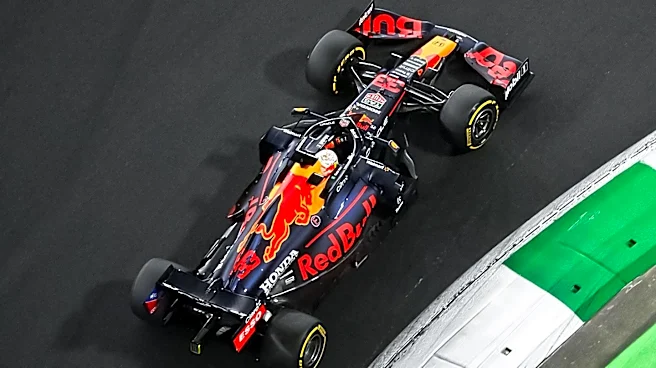
Red Bull team principal Laurent Mekies has voiced surprise regarding the unexpectedly rapid convergence of the top four Formula 1 teams under the new 2026 regulations. These regulations, which introduced a major technical reset with new chassis and power
unit rules, were initially anticipated to create significant performance disparities as teams developed their own solutions. However, Mercedes, Ferrari, McLaren, and Red Bull have all secured multiple Grand Prix victories in the inaugural season of this regulatory cycle, leading to a highly competitive and unpredictable battle at the front. Mekies suggests that this early convergence might indicate the regulations are 'fairly restrictive,' despite the visibly distinct design philosophies among the cars.
Why It's Important?
The early convergence of top F1 teams under the new 2026 regulations has significant implications for the sport's competitive landscape and fan engagement. While restrictive regulations might limit design freedom for engineers, the resulting tight competition among four leading teams—Mercedes, Ferrari, McLaren, and Red Bull—is viewed as a positive development for the sport. This increased unpredictability in race outcomes can attract a broader audience and sustain higher levels of interest throughout the season. For teams, it means that even minor technical advantages or strategic decisions can have a substantial impact on championship standings, intensifying the pressure on engineering and operational departments. The situation also highlights a potential trade-off between fostering innovation through open regulations and ensuring competitive balance, a perennial challenge for F1's governing bodies.
What's Next?
The focus will now shift to how this competitive landscape evolves in the second year of the new regulations. Teams will continue to refine their car designs and strategies within the existing framework, seeking marginal gains that could provide a decisive edge. The FIA, Formula 1's governing body, will likely monitor the situation closely to assess whether the current regulations are achieving their intended goals of competitive racing while also allowing for sufficient technical differentiation. Discussions may arise regarding potential adjustments to the regulations if the convergence is deemed too restrictive, stifling innovation, or if one team begins to dominate excessively. The performance of all teams, particularly the leading quartet, will be under scrutiny as they adapt to and exploit the nuances of the current rules.
Beyond the Headlines
The phenomenon of early convergence in Formula 1 under new regulations extends beyond mere sporting competition; it touches upon the philosophical debate within motorsports regarding the balance between technological innovation and competitive parity. While engineers and designers often prefer less restrictive rules to push the boundaries of automotive technology, the sport's commercial viability heavily relies on exciting, unpredictable races. This situation underscores a broader trend in regulated industries where the introduction of new rules often leads to an initial period of divergence, followed by rapid convergence as competitors optimize their approaches. It also raises questions about the long-term impact of 'restrictive' regulations on the sport's appeal to manufacturers and engineers who are drawn to F1 for its cutting-edge technical challenges. The current scenario could set a precedent for how future regulatory changes are framed, prioritizing competitive spectacle over unbridled technical exploration.