






What's Happening?
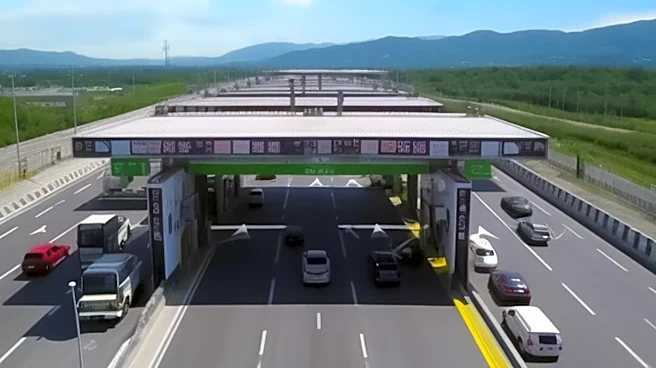
Crisil Ratings projects a moderation in toll collection growth on Indian highways to 5-7% for the current financial year. This revised forecast is attributed to the economic repercussions of the ongoing West Asia conflict and a deceleration in commercial
vehicle traffic. The ratings agency anticipates a decline of approximately 150-200 basis points year-on-year in toll collection growth, as geopolitical uncertainties are expected to exert pressure on freight movement and industrial activity. Traffic growth is predicted to remain in the 2-4% range in the near term, based on an analysis of 91 toll road assets spanning nearly 10,000 km, which represents about 60% of privately operated road concessions. The report also notes that relatively modest wholesale price index (WPI)-linked toll hikes this financial year are likely to constrain overall revenue growth. Conversely, passenger vehicle traffic continues to show resilience, benefiting from increased vehicle ownership, improved road connectivity, and faster travel facilitated by expanding expressway infrastructure, remaining largely unaffected by geopolitical disruptions.
Why It's Important?
The projected slowdown in toll collection growth in India highlights the far-reaching economic impact of international geopolitical events, such as the West Asia conflict, on domestic infrastructure revenue. This moderation could affect the financial health of toll road operators and investors, potentially influencing future infrastructure development and maintenance budgets. A decrease in commercial vehicle traffic signals broader economic headwinds, indicating reduced industrial activity and freight movement, which are key indicators of economic vitality. While passenger vehicle traffic remains robust, the overall dip in toll revenue growth could lead to a re-evaluation of investment strategies in the Indian road sector. For investors in Infrastructure Investment Trusts (InvITs) and pooled portfolios, which hold over 80% of the sampled assets, the diversification benefits are crucial in cushioning asset-level traffic volatility, as noted by Anand Kulkarni, Director, Crisil Ratings. The stability of debt service coverage ratios, expected to remain around 1.5 times, suggests that despite the slowdown, the sector maintains a degree of financial resilience.
What's Next?
The Indian toll road sector will likely face continued scrutiny regarding traffic trends and revenue generation in the coming months. Stakeholders, including government bodies, private operators, and investors, will closely monitor the evolving geopolitical situation in West Asia and its subsequent impact on global and domestic economic conditions. Adjustments to operational strategies and financial planning may be necessary for toll road companies to mitigate the effects of slower growth. Furthermore, the government might explore policy interventions or incentives to stimulate commercial vehicle traffic and industrial activity, thereby bolstering toll revenues. The ongoing expansion of expressway infrastructure and improvements in road connectivity are expected to continue supporting passenger vehicle traffic, which could partially offset the decline in commercial traffic. Future toll hike decisions, which are linked to the Wholesale Price Index, will also play a critical role in determining revenue growth, with any significant changes potentially influencing the financial outlook for the sector.
Beyond the Headlines
The Crisil report underscores the interconnectedness of global events and local economic performance, demonstrating how geopolitical tensions in one region can ripple through distant economies, affecting sectors like infrastructure. This situation also highlights the inherent vulnerabilities of revenue models heavily reliant on economic activity, such as toll collections. The resilience of passenger vehicle traffic, in contrast to commercial traffic, points to a potential shift in road usage patterns or differing sensitivities to economic downturns between consumer and industrial sectors. This could prompt long-term strategic considerations for urban planning and transportation infrastructure development, potentially leading to a greater focus on passenger mobility solutions. Moreover, the reliance on InvITs and pooled portfolios for diversification suggests a maturing financial market for infrastructure assets, where risk mitigation strategies are increasingly sophisticated. This trend could influence how future large-scale infrastructure projects are financed and managed, emphasizing diversified investment vehicles to absorb market shocks.