





What's Happening?
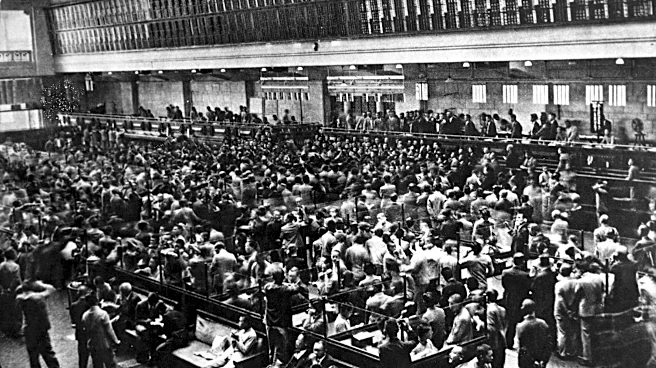
Bill Gates, co-founder of Microsoft and chair of the Gates Foundation, has included Andrew Ross Sorkin's '1929,' a narrative about the Wall Street stock market crash, in his 2026 summer reading list. This selection is part of a broader trend among top
CEOs and billionaires who are increasingly turning to books about past financial crises, leadership under pressure, and corporate behavior. Gates connects the themes of '1929' to current financial realities, specifically noting that phenomena like investing with borrowed capital continue to blur the line between investing and gambling. This choice reflects a mindset among business leaders seeking historical precedents to understand and navigate contemporary economic and technological shifts, particularly in the context of rapid AI advancements and an uncertain business environment.
Why It's Important?
Bill Gates's choice of '1929' for his summer reading list is significant as it signals a heightened awareness among influential business leaders about the potential for economic instability, even amidst technological booms. His explicit connection between historical financial crises and current investment trends suggests a cautionary perspective on market behavior. This focus on past economic downturns, particularly from a figure like Gates who is deeply involved in cutting-edge technology, indicates a recognition that technological progress does not inherently insulate economies from financial risks. For U.S. industries and economic stakeholders, this could imply a growing emphasis on risk management, regulatory oversight, and a more critical evaluation of investment practices. The interest in historical financial crises among top executives may also influence corporate strategies, potentially leading to more conservative financial planning or a greater focus on long-term stability over short-term gains, impacting investment flows and market sentiment.
What's Next?
The trend of prominent figures like Bill Gates studying historical financial crises suggests a potential shift in how business leaders approach economic forecasting and risk assessment. While no immediate policy changes are directly linked to Gates's reading choice, it contributes to a broader conversation among executives about economic resilience and the lessons from history. This intellectual engagement could subtly influence corporate governance, investment strategies, and even advocacy for certain financial regulations. The continued interest in books that analyze past crises, leadership challenges, and corporate ethics indicates that these themes will likely remain central to executive discussions in the coming years. This focus may also encourage a more interdisciplinary approach to business leadership, integrating historical and sociological insights with technological and economic expertise to better navigate future challenges.
Beyond the Headlines
Beyond the immediate financial implications, Bill Gates's selection of '1929' highlights a deeper cultural and intellectual shift among the global elite. It suggests a growing recognition that technological innovation, while transformative, does not operate in a vacuum and is deeply intertwined with economic cycles, human behavior, and historical patterns. This intellectual curiosity about past crises, particularly from a tech visionary, underscores a potential re-evaluation of progress itself—acknowledging that advancements can bring unforeseen vulnerabilities. The act of studying historical financial collapses, such as the Wall Street crash, can foster a more nuanced understanding of systemic risks and the human element in economic decision-making. This could lead to a more holistic approach to leadership, where historical context and ethical considerations are given equal weight alongside technological and financial metrics, ultimately shaping a more resilient and responsible business landscape.