



What's Happening?
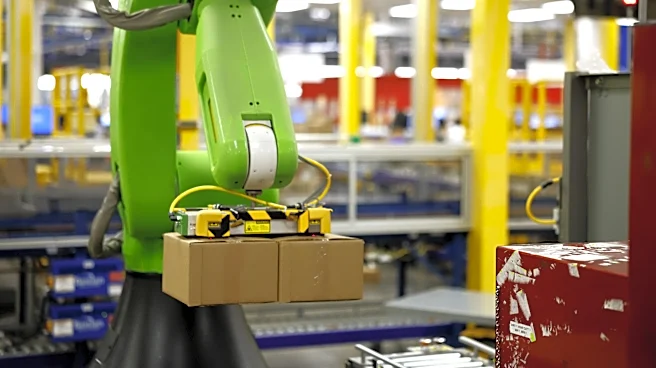
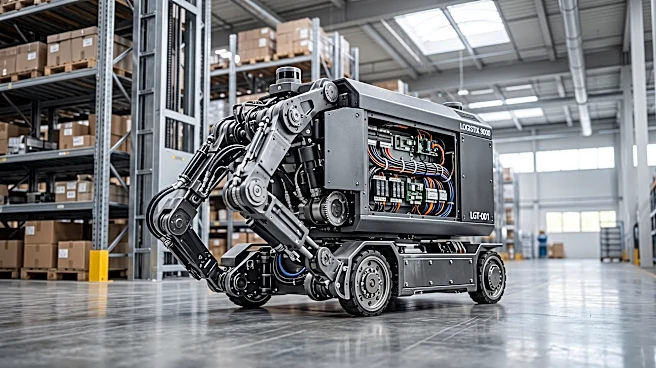
Boston Dynamics has significantly reduced the repair time for its Stretch truck-unloading robot. After accumulating 100,000 hours of real-world operation, the company discovered that the robot contained half a mile of wire, which complicated maintenance.
Initially, fixing issues with the Stretch robot could take an entire day. Through redesign and optimization, Boston Dynamics has managed to decrease this repair time to approximately one hour. This improvement addresses a critical aspect of industrial robotics: the efficiency and speed of maintenance, which directly impacts operational uptime and productivity in logistics and warehousing environments. The company's focus on refining the robot's internal architecture demonstrates a commitment to enhancing the practical usability and reliability of its advanced robotic solutions in demanding industrial settings.
Why It's Important?
This development is important for the robotics industry and businesses relying on automation, particularly in logistics and supply chain management. Reducing repair time from a full day to just one hour for a complex machine like the Stretch robot translates into substantial operational savings and increased efficiency. For companies utilizing these robots for truck unloading, minimizing downtime means more consistent workflow, higher throughput, and a quicker return on investment. It also signals a maturation in robotic design, moving beyond initial functionality to focus on long-term maintainability and cost-effectiveness. This improvement could accelerate the adoption of advanced robotics in warehouses and distribution centers, as businesses seek reliable and easily serviceable automated solutions to address labor shortages and increase operational speed. The ability to quickly service these machines makes them a more attractive and viable option for large-scale industrial deployment.
What's Next?
The successful reduction in repair time for the Stretch robot suggests a trend towards more user-friendly and maintainable industrial robots. Boston Dynamics is likely to continue refining its designs, incorporating lessons learned from extensive real-world usage into future iterations of the Stretch robot and other products. This could lead to further advancements in modular design, predictive maintenance capabilities, and remote diagnostic tools, making robots even more autonomous and less reliant on extensive human intervention for upkeep. Other robotics companies may also adopt similar strategies, prioritizing ease of maintenance as a key competitive advantage. Businesses considering automation solutions will likely place a higher value on robots with proven reliability and efficient service protocols, influencing purchasing decisions and driving innovation in the sector towards more robust and easily manageable systems.
Beyond the Headlines
The challenge of maintaining complex robotic systems, as highlighted by the half-mile of wire in the Stretch robot, underscores a broader issue in advanced technology: the balance between sophisticated functionality and practical serviceability. This improvement by Boston Dynamics reflects a deeper understanding of the lifecycle of industrial robots, moving beyond initial deployment to consider the long-term operational costs and challenges. It also touches upon the evolving skill sets required in the workforce, where technicians will need specialized knowledge to diagnose and repair increasingly intricate robotic systems efficiently. The emphasis on reducing repair time also has ethical implications, as it contributes to the sustainability of robotic deployments by extending their operational life and reducing waste associated with premature replacement. This focus on maintainability is crucial for the widespread and responsible integration of robotics into various industries, ensuring that these technologies are not only innovative but also practical and sustainable in the long run.