



What's Happening?
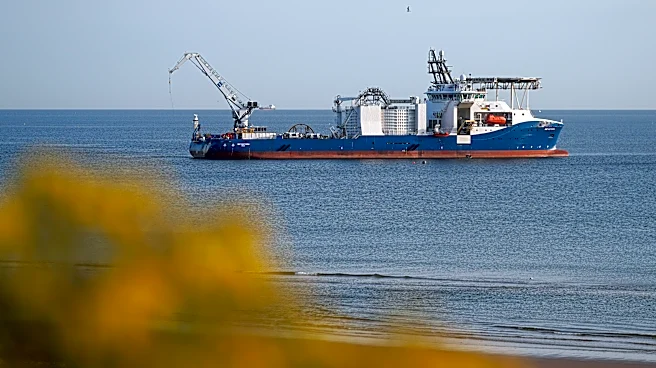
Boskalis has successfully repurposed a former mining ship into the Windpiper, now the largest subsea rock installation vessel. Originally built in 2018 as the Mac Goliath, the ship was intended for offshore mining but was left incomplete due to financial
issues faced by its original owners. Boskalis acquired the vessel in 2025 and converted it to support offshore wind farms. The Windpiper measures 227 meters and has a deadweight tonnage of nearly 69,000. It features two holds with a total capacity of 45,500 tons and is equipped with advanced positioning capabilities. The vessel's large capacity allows it to travel long distances between rock loading and project sites, reducing costs and installation time.
Why It's Important?
The conversion of the Windpiper represents a significant advancement in the offshore industry, particularly for the installation of wind farms. By doubling Boskalis' rock installation capacity, the vessel enhances the company's ability to support the growing demand for renewable energy infrastructure. This development also highlights the potential for repurposing existing maritime assets to meet new industry needs, offering a cost-effective and sustainable solution. The Windpiper's capabilities could lead to more efficient and timely completion of offshore projects, contributing to the global transition towards renewable energy sources.
What's Next?
The Windpiper is expected to begin operations soon, potentially setting a precedent for similar conversions in the maritime industry. As the demand for offshore wind farms continues to rise, other companies may follow Boskalis' lead in repurposing vessels to meet industry needs. This trend could drive innovation in vessel design and construction, as well as increase competition in the offshore services market. Additionally, the success of the Windpiper may encourage further investment in renewable energy projects, supporting global efforts to reduce carbon emissions.