



What's Happening?
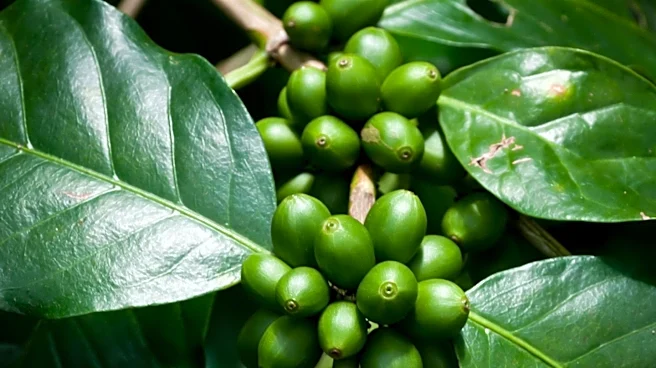
Arabica coffee prices have risen sharply, reaching a one-week high, driven by a decline in the U.S. dollar index to a seven-week low and tightening supplies. ICE-monitored arabica coffee inventories have fallen to a 2.5-year low, contributing to the price increase.
Additionally, the slow pace of Brazil's coffee harvest and reduced rain forecasts for Vietnam's Central Highlands, a key coffee-producing region, have supported the price surge. The USDA's forecast of a record global coffee output for the 2026-27 season, primarily due to improved conditions in Brazil, contrasts with concerns over potential El Niño impacts on future crops.
Why It's Important?
The rise in arabica coffee prices reflects broader economic and environmental factors, including currency fluctuations and climate conditions. This price increase could impact coffee producers, traders, and consumers, potentially leading to higher retail prices. The situation underscores the vulnerability of agricultural commodities to environmental changes and market dynamics. The potential El Niño effects on future coffee crops could further influence global supply and pricing, affecting stakeholders across the coffee supply chain.
What's Next?
Market participants will be closely watching weather patterns and currency movements, as these factors will continue to influence coffee prices. The potential impact of El Niño on Brazil's coffee crop could lead to further price volatility. Coffee producers may need to adapt to changing environmental conditions to ensure stable production levels. Additionally, traders and investors will monitor inventory levels and harvest progress in key coffee-producing regions to anticipate future market trends.