




What's Happening?
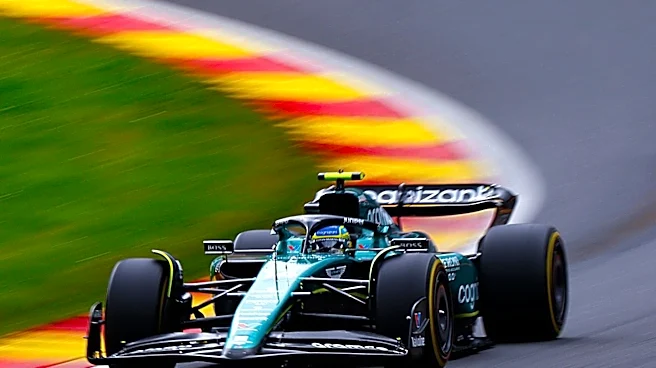
Fernando Alonso, a driver for Aston Martin, has been handed a 20-place grid penalty for the 2026 Belgian Grand Prix. This penalty significantly affects his starting position, despite qualifying 22nd. Alonso's penalty is one of the largest in the race,
alongside those given to Isack Hadjar and Lance Stroll. The penalties were issued due to technical issues, which have altered the starting grid. Kimi Antonelli, driving for Mercedes, secured pole position after a strong qualifying performance. The penalties have reshuffled the grid, with Lando Norris dropping from third to 13th due to a separate penalty for taking his fourth battery of the season.
Why It's Important?
Grid penalties in Formula 1 can drastically alter the dynamics of a race, affecting team strategies and driver performances. Alonso's penalty, along with others, highlights the technical challenges teams face in maintaining compliance with regulations. These penalties can impact the championship standings, as drivers like Alonso and Norris are forced to start further back, potentially affecting their ability to score points. The reshuffled grid also provides opportunities for other drivers, such as Kimi Antonelli, to capitalize on a favorable starting position. This situation underscores the importance of technical reliability and strategic planning in Formula 1.
What's Next?
As the race progresses, teams will need to adapt their strategies to the altered grid positions. Drivers affected by penalties will aim to make up positions during the race, which could lead to aggressive driving and potential on-track battles. The outcome of the Belgian Grand Prix will influence the championship standings, with drivers and teams keen to maximize their points haul. Observers will be watching how Alonso and others navigate the challenges posed by their penalties, and whether Antonelli can maintain his lead from pole position.