






What's Happening?
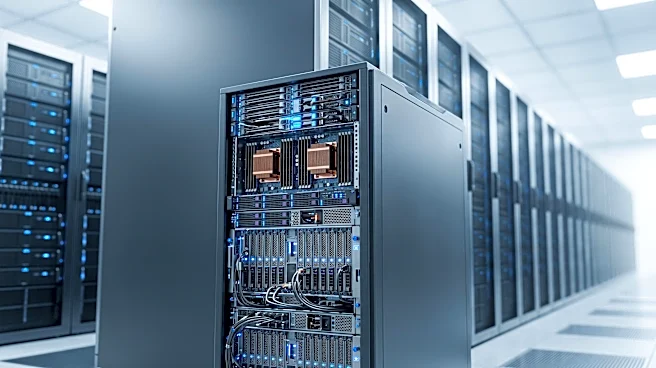
The Federal Reserve has released an assessment on the impact of Artificial Intelligence (AI) on the U.S. macroeconomy, highlighting a sharp increase in data center capital investment. This surge is driven by current and anticipated future demand for AI services,
encompassing both physical infrastructure and IT equipment like semiconductor chips. The report indicates that AI adoption is rapidly growing among both consumers and firms, although most companies are not yet utilizing AI intensively. While AI model-producing firms have experienced rapid growth and now constitute a notable portion of the software industry's gross output, the effects of AI on the labor market and aggregate productivity growth have so far been small and somewhat mixed. Prices have also climbed in sectors directly supplying data centers, such as memory chips.
Why It's Important?
The Federal Reserve's findings underscore a significant shift in U.S. economic investment towards AI infrastructure, signaling a long-term commitment to AI development and deployment. The substantial capital flowing into data centers and related IT equipment suggests that the foundational elements for a more AI-driven economy are being rapidly established. However, the report's observation that AI's impact on the labor market and productivity remains small and mixed is crucial. This indicates that while the technological groundwork is being laid, the broader economic benefits, such as widespread productivity gains and significant labor market shifts, are yet to fully materialize. This gap highlights the need for businesses to move beyond initial adoption to deeper integration and for policymakers to consider potential future impacts on employment and economic growth strategies.
What's Next?
As investment in AI infrastructure continues to accelerate, the U.S. economy can expect further growth in sectors supporting data centers and AI model development. The challenge ahead lies in translating this foundational investment and growing adoption into tangible macroeconomic benefits, particularly in productivity and labor market adjustments. Future developments will likely involve increased efforts by firms to integrate AI more intensively into their operations, potentially leading to more noticeable impacts on efficiency and job roles. Policymakers and economists will continue to monitor these trends closely to understand the long-term implications of AI on economic stability, employment patterns, and overall growth, potentially leading to new policy considerations for workforce retraining and industry support.
Beyond the Headlines
The Federal Reserve's report subtly points to a potential disconnect between the rapid technological advancement and its immediate, measurable economic impact. This 'productivity paradox' of AI suggests that the full benefits of transformative technologies often take time to diffuse and manifest across the economy. Beyond the direct economic indicators, the surge in data center investment also raises environmental concerns regarding energy consumption and carbon footprint, which could become a significant policy challenge. Furthermore, the mixed impact on the labor market, despite growing adoption, hints at a complex transition period where job displacement in some areas might be offset by job creation in others, requiring a proactive approach to workforce development and education to ensure a smooth societal adaptation to AI.