








What's Happening?
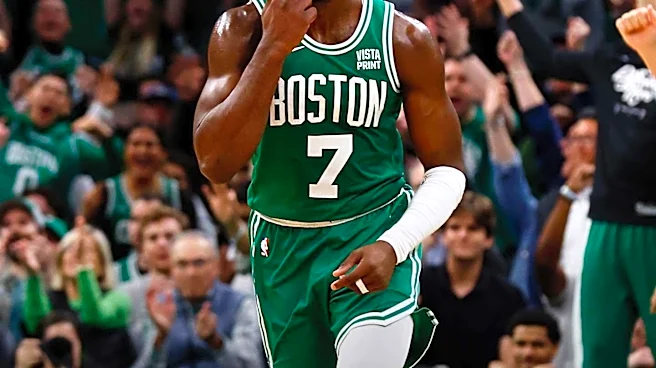
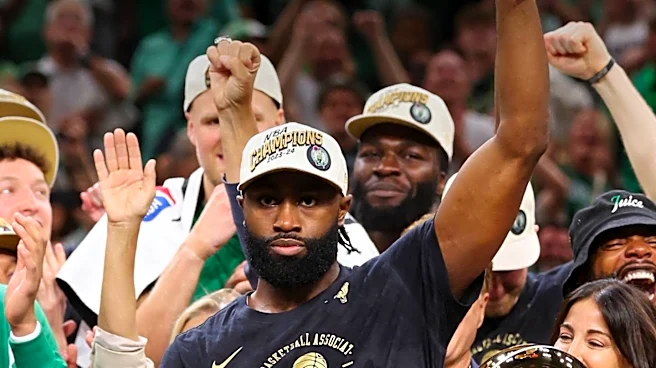
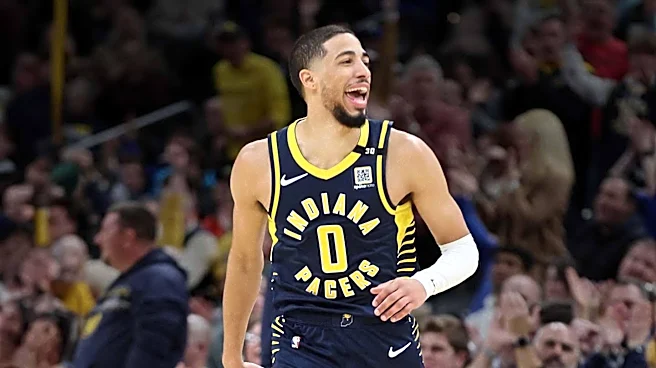
Indiana Pacers star Tyrese Haliburton has voiced concerns over the NBA's second apron rule following the trade of Jaylen Brown from the Boston Celtics to the Philadelphia 76ers. The second apron rule, implemented in 2024, imposes steeper tax penalties
on teams exceeding certain salary thresholds, aiming to prevent wealthier teams from dominating the league. Critics argue that it penalizes teams with strong, homegrown talent, as seen with the Celtics' decision to trade Brown due to his expensive contract. Haliburton suggests that the rule should be revisited in future collective bargaining agreements to ensure it does not hinder competitive balance.
Why It's Important?
The second apron rule is a significant factor in the NBA's efforts to maintain parity among teams, but it also raises questions about fairness and the ability of teams to retain their star players. The rule's impact on team dynamics and player movement could reshape the league's competitive landscape, affecting team strategies and financial planning. Haliburton's comments highlight the ongoing debate within the NBA community about the balance between financial regulations and competitive integrity, which could influence future policy changes.
What's Next?
The discussion around the second apron rule is likely to continue, especially as teams navigate its implications on roster construction and financial management. The NBA Players Association and team executives may push for adjustments to the rule in upcoming negotiations to address concerns about its impact on team competitiveness and player retention. The outcome of these discussions could lead to significant changes in how teams are structured and how player contracts are managed in the league.