






What's Happening?
An expert panel, convened by the International Chamber of Commerce (ICC) and Carbon Measures, has launched a plan for product carbon ledgers. This initiative aims to create a common set of rules, known as the TEP Carbon Accounting Framework, for recording
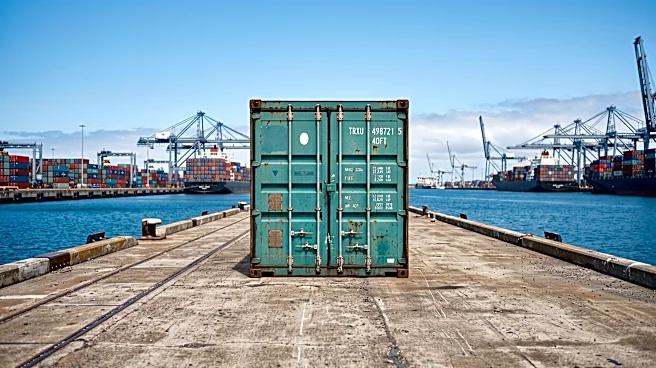
and tracking the emissions embedded in products throughout their supply chains. Currently, the carbon footprint of materials like steel and cement often becomes obscured as they are integrated into finished goods, with industry averages frequently used instead of precise figures. This lack of transparency makes it difficult for buyers to choose lower-emission options and for regulators to incentivize greener production. The proposed framework seeks to address this by treating carbon accounting similarly to financial accounting, where each company records its operational emissions, adds those from its purchases, allocates them to its products, and passes this data along when products are sold. This system would allow for a verifiable record of emissions at each stage of a product's lifecycle.
Why It's Important?
The implementation of product carbon ledgers holds significant importance for U.S. industries and global trade. With regulations like the European Union’s Carbon Border Adjustment Mechanism (CBAM) already charging importers for embedded carbon, and similar initiatives emerging, the ability to accurately track and report product emissions is becoming a critical factor in the cost of doing business. For U.S. manufacturers, this framework could provide a competitive advantage by allowing them to demonstrate the lower carbon footprint of their products, potentially opening new markets and avoiding tariffs. Conversely, companies unable to adopt such transparent accounting methods might face increased costs and reduced market access. The initiative also empowers consumers and policymakers to make more informed decisions, fostering a market environment where carbon-efficient production is rewarded. This shift could drive significant investment in decarbonization efforts across various sectors, from manufacturing to transportation, by making the economic benefits of reduced emissions more tangible.
What's Next?
The expert panel plans to develop the TEP Carbon Accounting Framework through three pillars: a conceptual framework, accounting rules, and implementation guidelines. The conceptual framework, which will establish the purpose, scope, and guiding principles, is slated for public comment in December 2026. Chapters detailing the accounting rules, covering aspects like recording, allocation, transfer, and verification of emissions, are expected to be published for consultation in the first quarter of 2027. Work on implementation, including digital requirements and integration across supply chains, is ongoing. The panel will continue to seek input from governments, standard-setters, and companies, with further discussions anticipated at events like COP31. The goal is to create a robust and verifiable system that can be adopted globally, ensuring that economic growth and emissions reduction can align.
Beyond the Headlines
The proposed product carbon ledgers represent a fundamental shift in how environmental impact is integrated into economic activity. Beyond compliance and market incentives, this framework addresses a critical ethical and transparency issue: the true environmental cost of goods. By making the carbon footprint visible and traceable, it challenges the current practice where emissions often become an invisible externality. This could lead to a re-evaluation of supply chain ethics, pushing companies to not only reduce their direct emissions but also to scrutinize the emissions of their suppliers. The long-term implications could include a more circular economy, where products are designed with their entire carbon lifecycle in mind, and a greater emphasis on sustainable sourcing. It also raises questions about data privacy and the standardization of reporting across diverse industries and international borders, which will be crucial for the framework's widespread adoption and effectiveness.