






What's Happening?
Embraer has delivered its first next-generation, super-midsize Praetor 600E business jet to launch customer Flexjet. This delivery is part of a larger order from Flexjet, which expects to receive a dozen of these aircraft in 2026. The Praetor 600E, along
with the Praetor 500E, received triple certification from the FAA, European Union Aviation Safety Agency (EASA), and Brazil’s ANAC earlier this year. Flexjet's order, valued at up to $7 billion, includes 182 Praetor 600Es, 500Es, and Phenom 300Es, with options for an additional 30 aircraft. Flexjet is also set to be the fleet launch customer for the 500E, with its first delivery anticipated in the fourth quarter of 2026. The company has already begun taking deliveries of the Phenom 300E. This marks a continued partnership between Embraer and Flexjet, which previously launched Embraer’s Legacy Executive in 2003, Phenom 300 in 2010, and Legacy 450 in 2016.
Why It's Important?
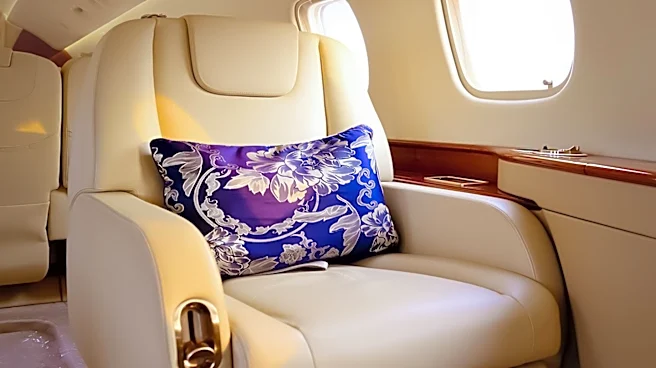
The delivery of the Praetor 600E signifies a significant advancement in the U.S. business aviation market, particularly for high-net-worth individuals and corporate clients. Flexjet, a prominent fractional jet ownership company, is enhancing its fleet with cutting-edge technology and comfort features, which could set new standards for luxury private air travel. The Praetor 600E is the first certified jet equipped with Embraer’s Smart Window, a 42-inch 4K OLED monitor that supports video conferencing, high-resolution video streaming, gaming, and can act as a virtual window. This technology, coupled with Starlink WiFi, caters to a younger demographic of aircraft owners who prioritize in-cabin experience and connectivity. The aircraft's intercontinental range of 4,018 nautical miles allows for nonstop New York-to-London trips, making it a competitive option in the super-midsize jet category. The redesigned cabin with ergonomic lie-flat seats, expanded headroom, and an advanced Cabin Management System further elevates the passenger experience, potentially influencing design trends across the private jet industry.
What's Next?
Flexjet is slated to receive a total of twelve Praetor 600E aircraft in 2026, with the first Praetor 500E delivery expected in the fourth quarter of the same year. This phased delivery will allow Flexjet to gradually integrate these advanced aircraft into its operational fleet, expanding its offerings for clients seeking enhanced comfort and technology. The adoption of features like the Smart Window and Starlink WiFi by a major operator like Flexjet could prompt other business jet manufacturers and operators to accelerate their own technological upgrades to remain competitive. Embraer will continue to provide technical support and monitor the performance of these new aircraft, gathering feedback that could inform future innovations. The success of these new Praetor models with Flexjet will likely influence future orders and partnerships within the U.S. private aviation sector, potentially driving further investment in advanced cabin technologies and long-range capabilities.
Beyond the Headlines
The introduction of the Praetor 600E with its Smart Window technology represents a broader shift in the private aviation industry towards integrating consumer-grade digital experiences into luxury travel. This move blurs the lines between a private jet cabin and a high-tech office or entertainment lounge, reflecting evolving client expectations for seamless connectivity and personalized environments. The emphasis on features like 4K OLED monitors for video conferencing and gaming, coupled with robust internet connectivity, highlights a growing demand for productivity and entertainment options during long-haul flights. This trend could lead to a redefinition of what constitutes 'luxury' in private air travel, moving beyond traditional comforts to encompass advanced digital integration. Furthermore, the focus on ergonomic design and enhanced cabin management systems suggests a holistic approach to passenger well-being, aiming to reduce travel fatigue and maximize comfort. This could set a precedent for future aircraft designs, prioritizing not just speed and range, but also the overall in-flight experience as a critical differentiator.