





What's Happening?
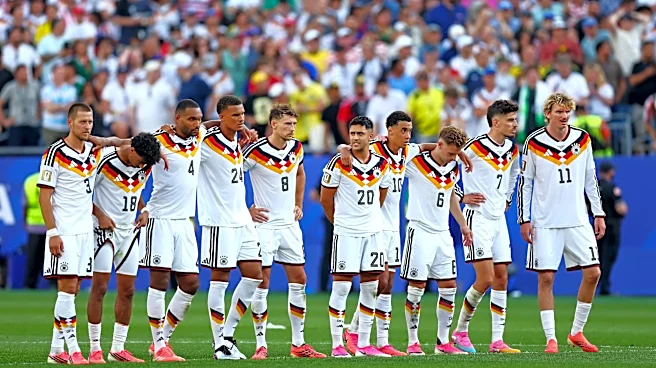
Keith Hackett, a former Premier League official and refereeing authority, has expressed concerns over the quality of officiating at the 2026 World Cup. Hackett highlighted several contentious decisions, including a disallowed goal for Germany against
Paraguay and a non-red card for Jamal Musiala's challenge. He criticized the use of VAR in these instances, arguing that it failed to correct clear errors. Hackett also noted inconsistencies in refereeing across different matches, such as the failure to penalize grappling offenses and the incorrect application of yellow cards. His comments come amid a backdrop of 104 matches being played across three countries, making this World Cup the most demanding in history.
Why It's Important?
The quality of officiating at major tournaments like the World Cup can significantly impact the outcomes of matches and the overall integrity of the competition. Hackett's critique underscores the ongoing debate about the effectiveness of VAR and the consistency of refereeing standards. Poor officiating can lead to controversial results, affecting teams' chances of progressing and potentially altering the tournament's narrative. This scrutiny may prompt FIFA to review and possibly revise officiating protocols to ensure fair play and maintain the sport's credibility.
What's Next?
As the World Cup progresses, FIFA may face increased pressure to address these officiating concerns. Potential actions could include reviewing the performance of referees and the application of VAR, as well as providing additional training or guidance to officials. The outcomes of these reviews could influence future tournaments and the implementation of technology in football. Stakeholders, including teams and fans, will likely continue to monitor and react to officiating decisions, potentially leading to broader discussions about the role of technology in sports.