





What's Happening?
Home automation systems are designed to connect various devices within a residence, enabling them to respond to predefined schedules, sensor readings, or other events. These systems typically comprise the devices themselves, a central control platform,
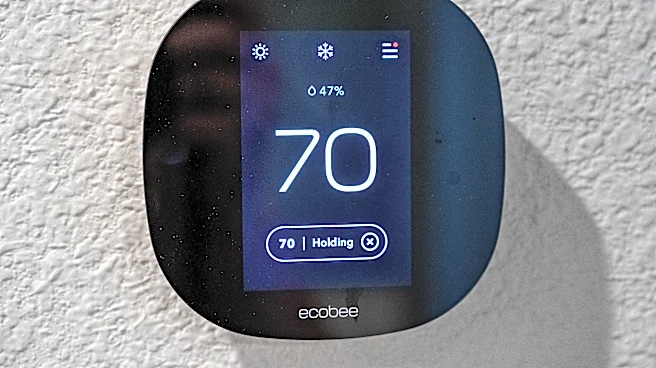
and automation rules that dictate how devices react to specific conditions, such as presence detection. The goal is to simplify daily tasks, allowing for actions like lights turning on upon room entry or thermostats adjusting according to a schedule. The industry is moving towards standardized connectivity, with Matter emerging as a royalty-free standard. Matter aims to facilitate interoperability between compatible devices and systems, operating over Thread and Wi-Fi network layers, and utilizing Bluetooth Low Energy for initial setup. This standardization seeks to address the challenge of ensuring different smart home products work cohesively, providing a more integrated and user-friendly experience for consumers. Various platforms like Google Home, Apple Home, and Home Assistant offer different approaches to managing these connected devices and creating automation rules, catering to diverse user needs and existing smart home ecosystems.
Why It's Important?
The advancement and standardization of home automation systems are crucial for the U.S. market as they promise to enhance convenience, energy efficiency, and security for homeowners. By allowing devices from different manufacturers to communicate seamlessly, standards like Matter reduce consumer frustration and encourage broader adoption of smart home technology. This interoperability can lead to a more competitive market, as manufacturers will need to focus on innovation and user experience rather than proprietary ecosystems. For industries, this means a potential surge in demand for compatible devices, software platforms, and installation services. Homeowners stand to gain from increased comfort, potential energy savings through optimized climate control and lighting, and enhanced security features like automated alerts. The shift towards more integrated systems also has implications for public policy, particularly concerning data privacy and cybersecurity, as more personal data is collected and processed within the home network. The success of these systems hinges on their reliability, ease of use, and the ability to function effectively even during internet outages, highlighting the importance of local control capabilities.
What's Next?
The future of home automation will likely see continued refinement of interoperability standards like Matter, leading to a more unified smart home ecosystem. Consumers can expect a wider range of compatible devices and more intuitive control platforms that simplify setup and management. The focus will increasingly shift towards robust local control capabilities, ensuring that essential automations function even without an internet connection, thereby enhancing reliability and user trust. Manufacturers will continue to innovate in areas such as advanced sensor technology for more precise presence detection and environmental monitoring, as well as more sophisticated AI-driven automation that learns user preferences over time. We may also see greater integration with other smart city initiatives and broader IoT networks, extending the benefits of automation beyond individual homes. As adoption grows, there will be an increased emphasis on cybersecurity measures and data privacy regulations to protect sensitive user information, potentially leading to new industry standards and governmental oversight.
Beyond the Headlines
Beyond the immediate benefits of convenience and efficiency, the widespread adoption of home automation systems could trigger significant long-term shifts in lifestyle and societal norms. The increasing reliance on automated environments may alter human interaction with physical spaces, potentially leading to new architectural designs that integrate smart technology from the ground up. Ethical considerations around data ownership and algorithmic control will become more prominent as AI systems make more decisions within the home. There's also a potential for a digital divide, where access to advanced home automation might become a marker of socioeconomic status, further exacerbating existing inequalities. Furthermore, the environmental impact of manufacturing and disposing of a growing number of smart devices will need to be addressed, pushing for more sustainable production and recycling practices. The legal framework surrounding liability in automated homes, especially in cases of system malfunction or security breaches, will also evolve, creating new challenges for policymakers and the legal system.