






What's Happening?
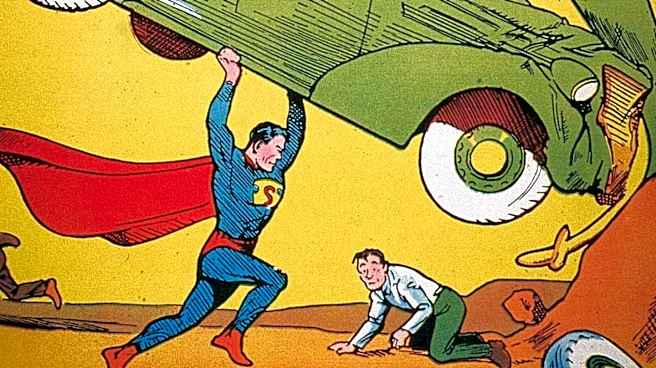
DC Comics has brought back the original Golden Age version of Superman in its new Black Label Elseworld series, 'Superman: The Stranger #1'. This iteration of the iconic hero, created by Jerry Siegel and Joe Shuster, is depicted as a more grounded character
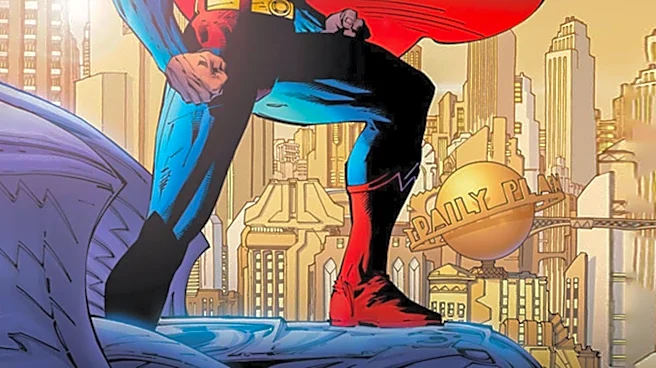
with restricted powers, focusing on tackling institutional corruption rather than cosmic threats. Unlike the modern, godlike alien Superman, this version is only 'faster than a speeding bullet, more powerful than a locomotive, and able to leap tall buildings in a single bound.' The story is set in 1938, the year of Superman's debut, and portrays Clark Kent as an orphan who grew up on the streets and worked in a sweatshop, eventually becoming a janitor for the Daily Planet. His realization that he must fight systemic injustice, rather than just street-level crime, is a core theme, reflecting the character's initial purpose during the Great Depression.
Why It's Important?
The return of the Golden Age Superman is significant as it re-emphasizes the character's roots as a 'Champion of the Oppressed' and an allegory for the immigrant experience. During the Great Depression, Siegel and Shuster, children of Jewish immigrants, conceived Superman as a symbol of hope for the downtrodden, fighting against issues like abusive landlords, racists, and corrupt politicians. This new series aims to recapture that original essence, making Superman's fight against institutional injustice and bigotry more meaningful in a contemporary context. By portraying Superman as an outsider who understands prejudice, the narrative resonates with current societal discussions around immigration and systemic oppression, highlighting the enduring relevance of the character's initial themes.
What's Next?
The 'Superman: The Stranger' series will continue to explore the character's more grounded approach to heroism, focusing on his efforts to combat institutional corruption and societal injustices. This direction suggests a potential shift in how DC Comics might approach its iconic characters, possibly leading to more stories that delve into the social and political commentary inherent in their origins. The series could influence future Black Label titles or even mainstream DC continuity by demonstrating the viability and appeal of a less overpowered, more socially conscious Superman. Readers can anticipate further exploration of Superman's sense of isolation as an alien and his role as a champion for marginalized communities.
Beyond the Headlines
This revival of the Golden Age Superman carries deeper implications regarding the evolution of superhero narratives and their societal reflection. By stripping away decades of cosmic lore and immense powers, DC Comics is making a statement about the enduring power of a hero who tackles real-world problems. It suggests a cultural appetite for stories that address systemic issues and offer hope in challenging times, much like Superman did during the Great Depression. The emphasis on Superman's immigrant allegory and his fight against bigotry also highlights the character's potential as a vehicle for social commentary, reminding audiences that heroism isn't solely about physical strength but also about moral courage and advocating for justice.