


What's Happening?
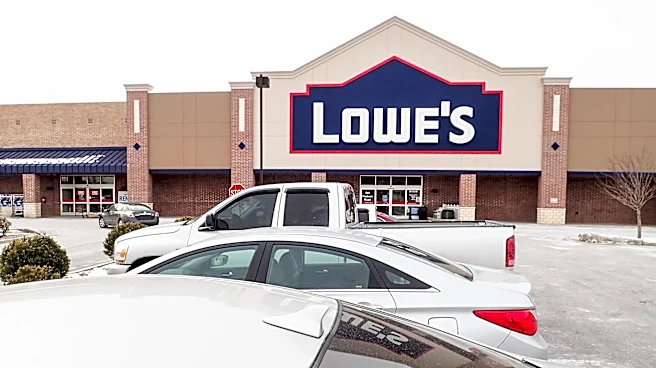
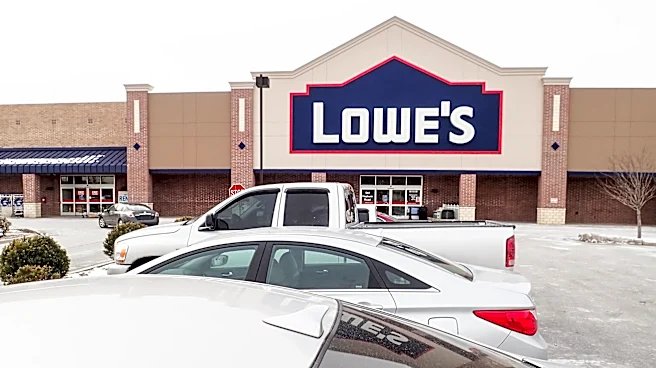
Lowe's, the home improvement retailer, has announced its decision to reinvest approximately $250 million in federal tariff refunds into initiatives aimed at benefiting customers and strengthening its competitive position. This plan was unveiled alongside
the company's quarterly results on November 18. According to CEO Marvin Ellison, the company's intention is to enhance the customer experience, reinforce its market standing, and deliver value to its customers. Roughly one-third of these refunds were utilized during the recent quarter to fund targeted promotions, loyalty programs, accelerate online order fulfillment, and eliminate delivery fees and surcharges for appliances. The remaining $166 million is slated for deployment in the fourth quarter. This strategy marks a shift from earlier in the year when an initial $80 million refund was used to offset rising fuel and energy costs rather than directly reducing prices. Ellison indicated that future refunds are expected to be minimal, with any additional amounts being returned to consumers. To maintain savings as refunds diminish, Lowe's plans to manage supplier costs, optimize international sourcing, expand its lower-priced store brands, and reduce internal expenses. The company reported sales of $22.8 billion for the quarter ending October 30, a 9.3% increase year-over-year, with net earnings rising 3.5% to $1.7 billion.
Why It's Important?
Lowe's decision to channel tariff refunds directly into customer-centric initiatives is significant for several reasons. Firstly, it signals a strategic pivot towards enhancing customer value and loyalty in a competitive retail landscape. By investing in promotions, loyalty programs, and improved service like faster online fulfillment and free appliance delivery, Lowe's aims to attract and retain customers, potentially increasing market share. This move could put pressure on competitors to offer similar benefits, leading to a more consumer-friendly environment in the home improvement sector. Secondly, the company's focus on managing supplier costs, reworking international sourcing, and growing private-label brands indicates a long-term strategy to sustain cost savings and competitive pricing beyond the immediate impact of tariff refunds. This proactive approach to operational efficiency is crucial for maintaining profitability and customer appeal. Lastly, the class-action lawsuit alleging that Lowe's retained tariff refunds rather than repaying customers highlights a broader legal and ethical debate surrounding how companies manage such funds. The outcome of this litigation could set precedents for how retailers handle similar situations in the future, impacting consumer trust and corporate accountability.
What's Next?
Lowe's plans to deploy the remaining $166 million in tariff refunds during the fourth quarter, which will likely translate into continued customer perks and promotional activities. Consumers can anticipate further benefits such as targeted promotions, loyalty program enhancements, and potentially more streamlined online shopping experiences. The company's ongoing efforts to manage supplier costs, optimize international sourcing, and expand its store brands will be critical in sustaining competitive pricing and value propositions as tariff refunds become negligible. This strategic focus suggests a continued emphasis on operational efficiency and cost control to maintain profitability. Furthermore, the class-action lawsuit filed against Lowe's regarding the tariff refunds will proceed, and its outcome could have significant implications for the company and the broader retail industry. Depending on the legal resolution, Lowe's may face financial penalties or be compelled to alter its refund distribution practices. Other major retailers facing similar lawsuits will also be closely watching these developments, as they could influence future legal challenges and corporate strategies concerning tariff-related funds.
Beyond the Headlines
The reinvestment of tariff refunds by Lowe's delves into deeper implications concerning corporate responsibility, consumer trust, and the economic impact of trade policies. While the immediate benefit to consumers through perks and promotions is evident, the underlying question of whether these refunds should have been passed on as direct price reductions remains a point of contention, as highlighted by the class-action lawsuit. This situation underscores the complex relationship between government trade policies, corporate financial decisions, and consumer welfare. It also raises ethical considerations about how companies balance shareholder interests with customer fairness when unexpected financial windfalls occur. In the long term, this event could influence consumer perception of corporate transparency and accountability, potentially leading to increased scrutiny of how large retailers manage cost savings and unexpected gains. The broader retail sector may also see a shift in how companies communicate and implement pricing strategies in response to external economic factors, aiming to preempt legal challenges and maintain public trust. This scenario highlights the evolving landscape of corporate governance where consumer advocacy and legal oversight play an increasingly significant role in shaping business practices.