
What's Happening?
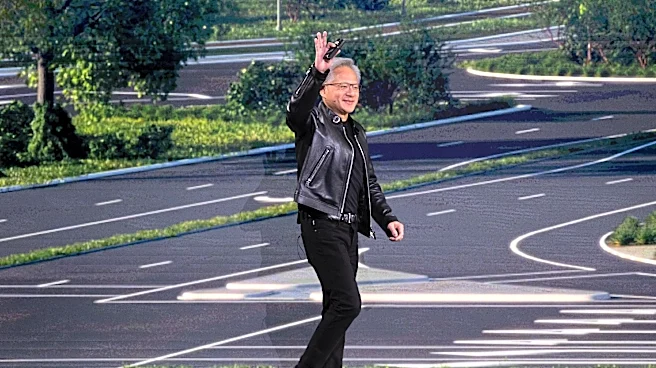
Nvidia's board has unanimously reinstated Jensen Huang as president, CEO, and director, less than two weeks after his resignation. Chief Financial Officer Colette Kress, who served as interim CEO, has returned
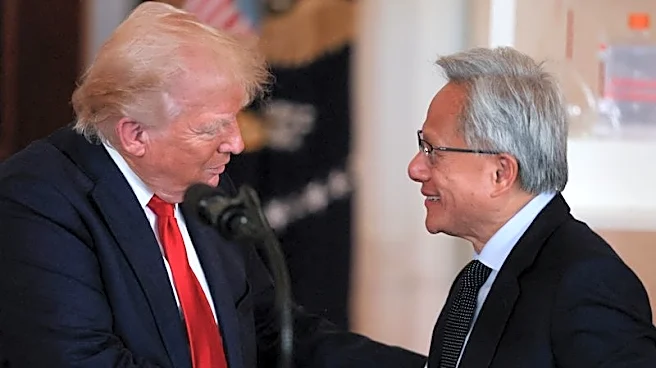
to her previous role. The reinstatement followed input from senior U.S. government officials, who concluded that Huang's return posed no national security risk. President Trump reportedly pushed for this decision. An independent board investigation into the circumstances of Huang's brief resignation is ongoing. Nvidia has also established a national security and export-control committee and plans to hire a chief compliance officer. Following the news, Nvidia shares surged by 31.5%, adding approximately $950 billion in market value. Concurrently, the Commerce Department blacklisted Singapore-based Megaspeed, a cloud provider under investigation for allegedly diverting U.S. chips to China. Huang is scheduled to testify before the Senate Banking Committee on December 3 regarding U.S. chip export controls.
Why It's Important?
The reinstatement of Jensen Huang is critical for Nvidia and the broader U.S. AI ecosystem, as Nvidia is a dominant supplier of hardware for AI development. The U.S. administration's intervention highlights the strategic importance of AI and the government's increasing involvement in its development, even within private companies. This move ensures continuity at a company central to the AI buildout, reinforcing how dependent the AI ecosystem has become on Nvidia. However, the situation also underscores the complex and sometimes conflicting priorities within Washington, as the administration supported Huang's return while simultaneously tightening restrictions on access to Nvidia's chips. These export controls, particularly those targeting remote access to advanced U.S. computing capacity through overseas data centers and the blacklisting of entities like Megaspeed, aim to prevent the diversion of U.S. technology to China. This could impact Nvidia's ability to serve Chinese demand through foreign intermediaries, potentially weakening its long-term influence over Chinese AI development and affecting its commercial incentives to support open-weight models.
What's Next?
Jensen Huang is slated to testify before the Senate Banking Committee on December 3, where he will address U.S. chip export controls. This testimony will likely provide further insight into the government's strategy and Nvidia's role in navigating these restrictions. The ongoing independent board investigation into the circumstances surrounding Huang's brief resignation will continue, and its findings could influence future corporate governance and national security protocols within the tech sector. The establishment of Nvidia's national security and export-control committee and the hiring of a chief compliance officer indicate a proactive approach to adhering to U.S. regulations. Furthermore, the tightening of export controls by the Commerce Department, including the blacklisting of entities like Megaspeed, suggests a continued focus on preventing the diversion of advanced U.S. computing capacity. These developments will likely shape the future landscape of AI development, particularly concerning international collaboration and the accessibility of advanced AI models.
Beyond the Headlines
The events surrounding Jensen Huang's reinstatement reveal a deeper trend of the U.S. government's increasing involvement in the private sector, particularly in strategically critical areas like artificial intelligence. This intervention, driven by national security concerns and the desire to maintain U.S. leadership in AI, blurs the lines between corporate decision-making and national policy. The focus on export controls and the potential for a government-directed AI project, as predicted by some analysts, suggest a shift towards a more controlled and nationalized approach to AI development. While Huang's return preserves an advocate for open-weight models, the tightening restrictions on Chinese access to U.S. computing capacity could inadvertently concentrate influence over AI development among a few proprietary model providers if American alternatives fail to close the gap. This raises ethical and economic questions about market competition, innovation, and the global distribution of AI capabilities, potentially leading to a more fragmented global AI landscape.