

What's Happening?
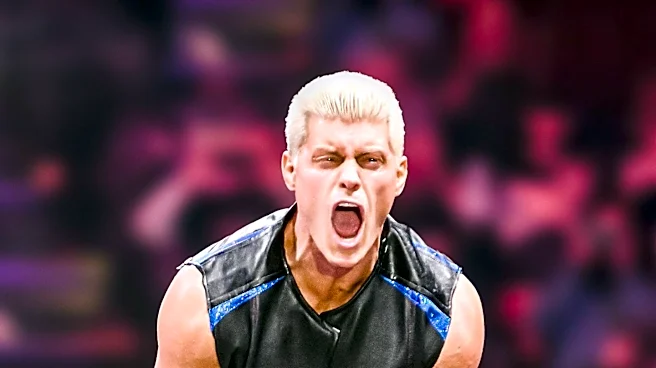
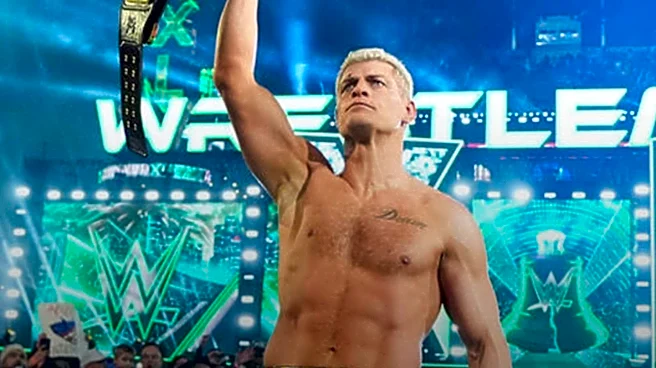
Eric Bischoff, a prominent figure in professional wrestling, has voiced his opinion that Cody Rhodes hosting a podcast is a mistake. Bischoff believes that while Rhodes is capable and likable as a host, this role leads to overexposure, diminishing his special
status as one of WWE's top stars. He argues that active top-tier wrestlers, especially those positioned as main event attractions, should be the subjects of interviews rather than the interviewers. Bischoff drew a comparison to Stone Cold Steve Austin, who hosted a podcast after his full-time wrestling career concluded, not while he was actively competing at the highest level. He suggests that having Rhodes interview other wrestlers makes him less unique and more 'familiar,' which can detract from his mystique and star power.
Why It's Important?
Eric Bischoff's critique of Cody Rhodes' podcast role highlights a significant debate within the U.S. professional wrestling industry regarding talent management and brand preservation. Bischoff's perspective, rooted in traditional wrestling philosophy, emphasizes the importance of maintaining a wrestler's mystique and perceived 'specialness' to maximize their drawing power. Overexposure, in this view, can dilute a star's appeal and make them seem less extraordinary, potentially impacting ticket sales, merchandise revenue, and overall fan engagement. This discussion is crucial for WWE and other wrestling promotions as they navigate the balance between leveraging their talent across various media platforms and protecting the long-term value of their top stars. It also raises questions about the evolving nature of celebrity in the digital age, where constant access to personalities is often expected, but can come at the cost of their unique allure.
What's Next?
Bischoff's comments, while critical, are unlikely to immediately alter Cody Rhodes' current media engagements, but they contribute to an ongoing conversation within the wrestling community about talent utilization. WWE may continue to experiment with various media roles for its stars, weighing the benefits of increased exposure against the risks of overexposure. Future decisions regarding Rhodes' media appearances, including his podcast, might be influenced by internal assessments of his market appeal and fan reception. This debate could also prompt other wrestling promotions to re-evaluate their strategies for presenting top talent, potentially leading to more selective media engagements for their main event stars to preserve their unique appeal. The discussion underscores the continuous challenge of adapting traditional entertainment models to modern media consumption habits.
Beyond the Headlines
Beyond the immediate concerns of wrestling booking, Bischoff's argument touches on a broader cultural phenomenon: the impact of constant media access on celebrity status. In an era dominated by social media, podcasts, and reality television, the traditional 'star' persona, often built on a degree of inaccessibility and mystique, is increasingly challenged. Bischoff's view suggests that for certain types of entertainment, particularly those relying on larger-than-life characters like professional wrestling, maintaining a degree of separation between the performer and the audience is crucial for sustaining their appeal. This raises ethical questions about the pressure on public figures to constantly engage with their audience, and the potential psychological toll of blurring the lines between their professional and personal identities. It also highlights a generational divide in how 'stardom' is perceived and cultivated, with traditionalists valuing scarcity and modern audiences demanding transparency and constant interaction.