





What's Happening?
The smart home market is forecasted to reach over $479 billion by 2030, exhibiting a compound annual growth rate (CAGR) of 22%. This expansion is fueled by the increasing adoption of connected technologies and integrated home automation systems. Within
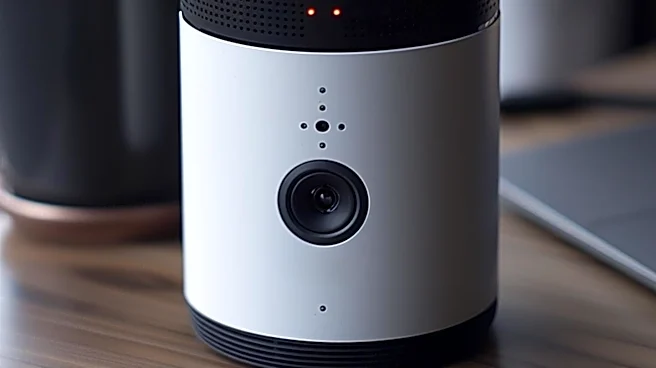
this market, security and access control is anticipated to be the dominant segment, projected to account for approximately $130 billion by 2030. This growth is attributed to heightened concerns regarding residential safety, the proliferation of smart locks, video doorbells, and connected surveillance cameras, alongside innovations in facial recognition and real-time alerts. Other significant growth areas include lighting control, HVAC control, smart speakers, and home appliances. The market is segmented by components into software, services, and hardware, with distribution channels categorized as direct and indirect. Technology-wise, solutions are divided into wireless and cellular network-based systems, both crucial for connectivity and control.
Why It's Important?
The rapid growth of the smart home market signifies a substantial shift in consumer behavior and technological integration within U.S. households. For industries, this means increased demand for hardware manufacturers, software developers, and service providers specializing in smart home solutions. The emphasis on security and energy efficiency presents significant opportunities for companies offering advanced surveillance systems, smart thermostats, and energy monitoring devices. The U.S. is expected to remain a leading market, reaching $127 billion by 2030, indicating a robust domestic market for innovation and sales. This trend also impacts utility companies, as smart home technologies contribute to optimized energy consumption, potentially leading to reduced energy demand and new service offerings related to energy management. Furthermore, the increasing interoperability of devices and the simplification of user experiences are crucial for broader consumer adoption, benefiting both established tech giants and emerging startups.
What's Next?
The smart home market is expected to continue its trajectory of rapid growth, with ongoing innovation in automation, security, and energy management. Key players are likely to focus on building integrated smart home ecosystems and leveraging AI to enhance capabilities. The development of unified communication standards will further improve device interoperability, simplifying user experiences and expanding market accessibility. Companies will continue to invest in research and development to introduce more affordable sensors and devices, predictive automation, and cross-device compatibility. The increasing demand for subscription services related to smart home functionalities, such as enhanced security monitoring or advanced energy analytics, will also drive new business models and revenue streams. Regional expansion, particularly in the Asia-Pacific region, will also be a significant trend, though the U.S. will maintain its strong market position.
Beyond the Headlines
The widespread adoption of smart home technology raises deeper implications concerning data privacy and cybersecurity. As more devices connect and collect personal data, the need for robust security measures and clear privacy policies becomes paramount. The integration of AI, particularly in features like facial recognition, while enhancing convenience and security, also sparks ethical debates about surveillance and individual liberties. The market's fragmentation, with many companies vying for market share, underscores the challenges of achieving seamless integration and interoperability across different platforms and brands. Long-term, the evolution of smart homes could redefine the concept of living spaces, transforming them into highly personalized, responsive environments that anticipate and cater to residents' needs, potentially impacting urban planning, home design, and even social interactions within the home.