








What's Happening?
Food distributor Sysco announced that a cyclosporiasis outbreak negatively affected its first-quarter sales, contributing to weaker-than-expected results. The Houston-based company reported that restaurant customer traffic and order volumes softened in August
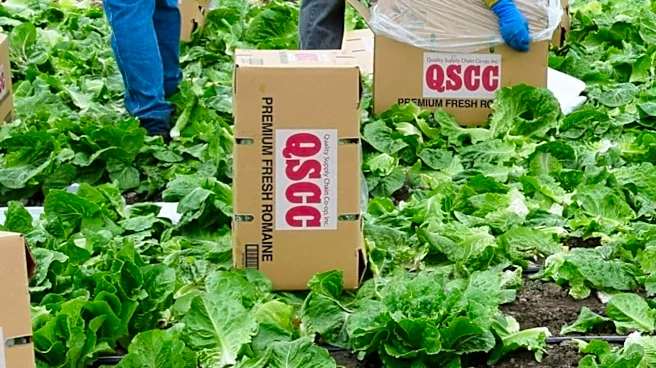
due to the outbreak, which weighed on demand. In response to the U.S. outbreak, Sysco had halted the sale and distribution of Taylor Farms iceberg lettuce originating from Mexico in July. CEO Kevin Hourican noted that the 'cyclospora headwind' impacted the company for approximately six weeks during the quarter. Sysco's first-quarter net sales increased by 2.8% to $21.74 billion, falling short of analysts' estimates of $22.02 billion. Adjusted earnings per share were $1.19, aligning with estimates. The company now anticipates its annual sales growth to be at the lower end of its previously projected range of 6% to 7%.
Why It's Important?
This development highlights the significant vulnerability of the U.S. food supply chain to public health incidents like foodborne illness outbreaks. Sysco, as a major food distributor, plays a critical role in supplying restaurants and other food service establishments across the country. The decision to halt distribution of a specific product from a key supplier like Taylor Farms underscores the immediate and far-reaching consequences of such outbreaks, impacting not only the affected producers but also the entire distribution network and end consumers. The reported softening of restaurant demand indicates a broader public concern about food safety, which can lead to reduced consumer confidence and spending in the food service sector. This situation also emphasizes the financial risks for large corporations, as evidenced by Sysco's missed sales estimates and an almost 8% drop in its shares, demonstrating how health-related incidents can directly affect corporate profitability and investor sentiment.
What's Next?
Sysco will likely continue to monitor food safety protocols rigorously and work closely with suppliers to prevent future outbreaks. The company's revised annual sales growth outlook suggests a cautious approach, indicating that the impact of such health incidents can linger. Consumers may remain vigilant about food safety, potentially influencing their dining choices and preferences for certain food products or brands. Regulatory bodies will likely intensify their oversight of food production and distribution, particularly for fresh produce, to mitigate public health risks. The incident could also prompt other food distributors and retailers to review their supply chain resilience and crisis management strategies to better respond to similar challenges in the future, potentially leading to increased investment in food safety technologies and traceability systems.
Beyond the Headlines
The incident with the cyclosporiasis outbreak and its impact on Sysco's sales points to a broader societal challenge concerning food safety and global supply chains. The reliance on imported produce, as seen with the Taylor Farms iceberg lettuce from Mexico, introduces complexities in monitoring and controlling foodborne pathogens. This event could spark discussions about the balance between cost-efficiency in global sourcing and the imperative of public health protection. It also highlights the ethical responsibility of food companies to ensure the safety of their products, even when facing economic pressures. The ripple effect on restaurant demand suggests a deeper psychological impact on consumers, where trust in the food system can be easily eroded by health scares, leading to long-term shifts in consumer behavior and potentially stricter industry standards and regulations.