
What's Happening?
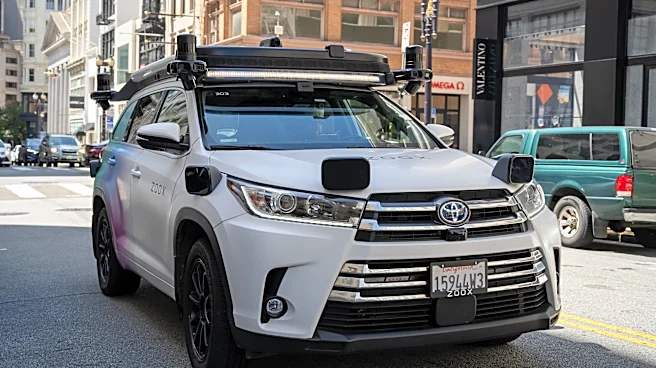
Zoox, an Amazon subsidiary, has initiated the rollout of its purpose-built robotaxi service in Santa Monica, California. This marks the company's entry into the Los Angeles market, following launches in Austin,
Texas, Miami, and an existing paid service in Las Vegas and an early rider program in San Francisco. Unlike other autonomous vehicles that are retrofitted, the Zoox robotaxi was designed from the ground up for fully autonomous ride-hailing, featuring no steering wheel or driver's seat and carriage-style seating for up to four passengers. The company states the vehicle incorporates over 100 safety features unique to its design. Initially, rides will be restricted to Zoox employees, their families, and friends, with plans to open a waitlist for the public next year and expand its service area progressively. Zoox has been conducting test fleet operations in Los Angeles since spring 2025, mapping local driving behaviors and weather patterns.
Why It's Important?
The introduction of Zoox's robotaxi service in Santa Monica is significant for the autonomous vehicle industry and urban transportation in the U.S. Santa Monica has been a proving ground for driverless technology, but also a critical environment, with previous incidents involving other autonomous vehicle companies leading to public and regulatory friction. Zoox's 'measured, collaborative approach' and emphasis on safety, with over 100 unique safety features, could set a new standard for autonomous vehicle deployment and potentially rebuild public trust in the technology. The expansion of robotaxi services offers an alternative mobility option, potentially reducing traffic congestion and carbon emissions in urban centers. However, the success of Zoox's rollout will depend on its ability to navigate local concerns regarding safety, accessibility, and community trust, which have been points of contention for other autonomous vehicle operators in the region.
What's Next?
Zoox plans to open a Los Angeles waitlist for its robotaxi service next year, ahead of launching its 'Zoox Explorers' early rider program. The company intends to expand its service area as operations progress, indicating a gradual and deliberate scaling of its presence in the region. Local leadership, including City Manager Oliver Chi, will be closely monitoring Zoox's operations, emphasizing safety, accessibility, and community trust. The company's engagement with local organizations, such as Sounds Like LA and Wise & Healthy Aging, suggests an effort to integrate into the community and address local needs. The ongoing negotiations for Zoox to park up to 150 robotaxis at the Main Library garage highlight the logistical and infrastructural considerations for expanding autonomous vehicle fleets in urban environments. The success of Zoox's phased rollout will likely influence future regulatory decisions and public acceptance of autonomous ride-hailing services in other U.S. cities.
Beyond the Headlines
The launch of Zoox's robotaxi in Santa Monica underscores a broader societal debate about the integration of autonomous technology into daily life. The city's history with driverless technology, including a moratorium on autonomous delivery devices and legal disputes with other AV companies, highlights the complex challenges of public acceptance and regulatory frameworks. The 'purpose-built' nature of the Zoox robotaxi, designed specifically for autonomous ride-hailing without traditional controls, represents a significant shift from retrofitted vehicles and could influence future automotive design and manufacturing. This development also raises questions about the future of human employment in transportation, as fully autonomous services reduce the need for human drivers. The emphasis on community engagement and a 'measured approach' by Zoox suggests a recognition of the ethical and social responsibilities that come with deploying advanced AI-driven systems in public spaces, potentially shaping how other tech companies approach similar rollouts.