


What's Happening?
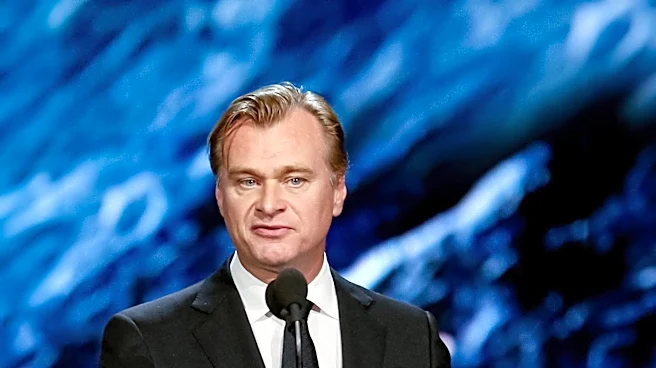
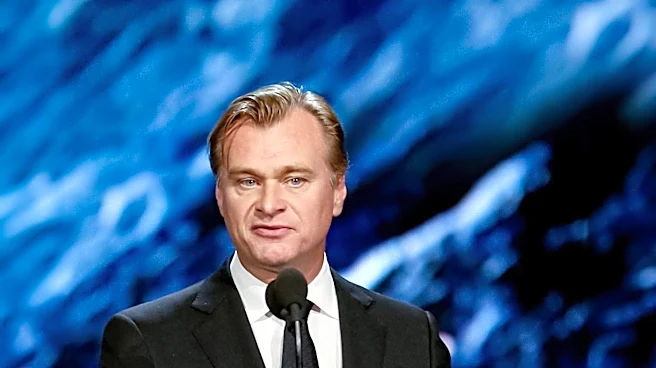
Christopher Nolan, president of the Directors Guild of America (DGA), has addressed the ongoing efforts to establish protections against artificial intelligence (AI) in film and television production. Speaking on the 'Hollywood Insiders' podcast, Nolan acknowledged
the DGA and Alliance of Motion Picture and Television Producers (AMPTP) for negotiating 'excellent language and guardrails' regarding AI. However, he emphasized that the primary responsibility for protecting copyrights against AI ingestion and use as training data ultimately rests with the studios. Nolan highlighted that most guild members are not copyright holders of their work, making studio accountability crucial. He also noted that his film 'The Odyssey' included boilerplate language prohibiting its use for generative AI training, a step he found encouraging.
Why It's Important?
Nolan's comments underscore a critical and evolving challenge for the U.S. entertainment industry: safeguarding intellectual property in the age of artificial intelligence. The DGA's efforts to negotiate AI protections are vital for creators, ensuring their work is not exploited without consent or compensation. The distinction Nolan draws between guild negotiations and studio responsibility highlights a potential gap in protection, as studios hold the copyrights. If studios do not actively enforce these protections, creators' work could be used to train AI models, potentially devaluing human artistry and labor. This issue has significant implications for the economic models of film and TV production, affecting writers, directors, actors, and other creative professionals who rely on their intellectual property for their livelihoods. The inclusion of protective language in 'The Odyssey' could set a precedent for future productions, influencing industry-wide practices.
What's Next?
The discussion around AI protections in Hollywood is expected to continue evolving, with a focus on litigation and legislation. Nolan believes that existing laws protecting creators will eventually hold up in court against companies attempting to use 'fair use' provisions for AI training. He anticipates a long legal process but is confident that the industry will reach a point where creators' work is adequately protected from unauthorized use and repurposing by AI. The DGA, along with other guilds, will likely maintain pressure on studios to implement and enforce robust copyright protections. The boilerplate language in 'The Odyssey' may become a standard practice, leading to more widespread adoption of similar clauses in production contracts across the industry. This ongoing battle will shape the future of intellectual property rights in creative fields.
Beyond the Headlines
The debate over AI in creative industries extends beyond mere copyright protection; it touches upon fundamental questions of artistic ownership, ethical use of technology, and the future of human creativity. Nolan's assertion that 'AI is too big a catchall term' and that companies use it to 'absolve themselves of responsibility' points to a deeper philosophical conflict. The industry is grappling with how to integrate powerful new technologies without undermining the value of human artistic endeavor. This situation could lead to new legal frameworks specifically designed for AI-generated content and its relationship to original human-created works. The outcome of these discussions and legal battles will not only impact Hollywood but could also set precedents for other creative sectors facing similar challenges, influencing how society values and protects intellectual property in an increasingly AI-driven world.