

What's Happening?
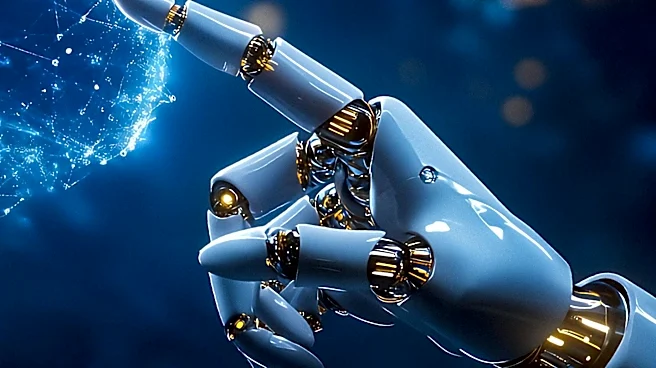
Italian robotics company Prensilia has launched the NH1 Era, a new robotic hand designed for industrial humanoid robots and cobots. Unveiled at SPS 2026 in Nuremberg, Germany, the NH1 Era aims to bridge the gap between physical AI research and practical
industrial applications. The hand offers enhanced versatility compared to traditional industrial grippers, meeting production environment demands for robustness, simplicity, and cost-effectiveness. Its underactuated fingers use mechanical intelligence to adapt to various object shapes and sizes, and can be equipped with force sensors for precise grasping. Key technical features include up to 70 newtons of thumb fingertip force with tri-axis sensors, an ISO 9409-1-compatible mechanical interface, up to 48 volts supply voltage, and RS-485 and Ethernet-based communication protocols. Prensilia, a spin-off from Scuola Superiore Sant’Anna in Pisa, Italy, is now accepting pre-orders for the first production batch.
Why It's Important?
The introduction of the NH1 Era robotic hand is significant for the U.S. industrial sector as it facilitates the integration of advanced robotics into manufacturing and logistics. By providing hardware that supports physical AI development, Prensilia is enabling U.S. companies to train and test robotic manipulation skills with equipment suitable for real-world industrial operations. This can lead to increased automation in high-mix, low-volume manufacturing, where robots need to handle diverse components without frequent tooling changes. Applications such as kitting, assembly, machine loading/unloading, handling delicate components, and automated testing of human-machine interfaces stand to benefit. The NH1 Era's combination of mechanical adaptability, sensor feedback, and software integration simplifies the development of robotic applications, potentially boosting productivity and efficiency across various U.S. industries and making advanced robotics more accessible.
What's Next?
Prensilia has opened pre-orders for the initial production batch of the NH1 Era robotic hand, indicating that the product will soon be available for deployment. The company's focus on industrial applications suggests that the next phase will involve integration into various manufacturing and logistics settings, potentially including U.S. facilities. As physical AI development teams begin to utilize this hardware, there will likely be a push to refine and expand its capabilities for specific industrial tasks. The availability of Robot Operating System (ROS) libraries for control and simulation will further accelerate its adoption and development within the robotics community. Future developments may include broader partnerships with U.S. robotics integrators and manufacturers to customize and deploy the NH1 Era in diverse operational environments.
Beyond the Headlines
The NH1 Era represents a broader trend in robotics towards more versatile and intelligent end-effectors, moving beyond specialized grippers to more human-like manipulation capabilities. This shift has profound implications for the future of work, potentially enabling robots to perform more complex and nuanced tasks previously reserved for human workers. While this could lead to increased efficiency and safety in hazardous environments, it also raises questions about workforce adaptation and the need for new skill sets in managing and programming these advanced robotic systems. The emphasis on 'mechanical intelligence' and sensor feedback highlights a move towards more autonomous and adaptive robotic systems, which could redefine manufacturing processes and supply chains globally, including within the U.S. The ethical considerations of human-robot collaboration and the long-term economic impact of widespread robotic adoption will become increasingly pertinent.