





What's Happening?
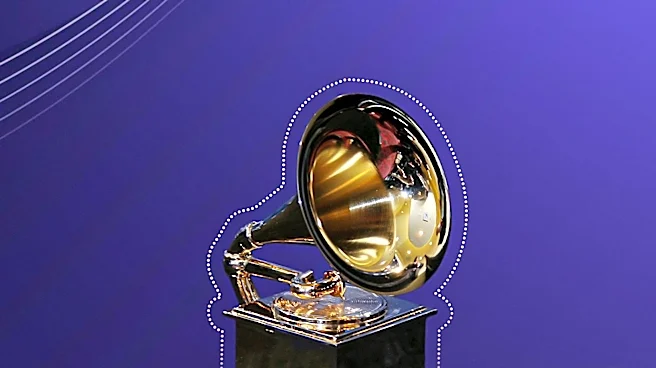
Rosanne Cash penned her hit single 'I Don’t Know Why You Don’t Want Me' after experiencing a significant disappointment at the 1983 Grammy Awards. Cash was nominated for Best Country Vocal Performance, Female, for her 1982 song 'Ain’t No Money,' but the award
ultimately went to Juice Newton for 'Break It to Me Gently.' Feeling heartbroken by the loss, Cash began composing the lyrics for 'I Don’t Know Why You Don’t Want Me' while driving on Hollywood Boulevard. She later collaborated with her then-husband, Rodney Crowell, to complete the song. The track, which was released in 1985 on her album 'Rhythm & Romance,' ironically went on to win Cash her first Grammy Award in 1986, also for Best Country Vocal Performance, Female. Juice Newton was also nominated in the same category that year for 'You Make Me Want To Make You Mine.'
Why It's Important?
This event highlights a unique intersection of personal artistic experience and professional recognition within the music industry. Rosanne Cash's ability to channel a moment of professional rejection into a critically acclaimed and commercially successful song demonstrates the transformative power of art. It underscores how setbacks can often fuel creative output, leading to unexpected triumphs. The ironic twist of winning a Grammy for a song born out of a previous Grammy loss adds a compelling narrative to her career, illustrating resilience and the unpredictable nature of success in the entertainment world. This story also provides insight into the subjective and competitive nature of awards, where a perceived failure can ultimately lead to a greater, more meaningful victory. For aspiring artists, it serves as a powerful example of perseverance and finding inspiration in adversity.
What's Next?
While the event itself is historical, its legacy continues to influence how artists and the public perceive awards and creative processes. The narrative of 'I Don’t Know Why You Don’t Want Me' serves as a timeless reminder that artistic value is not solely defined by immediate accolades. Future discussions around music awards may continue to reference such stories, emphasizing the long-term impact of an artist's body of work over individual award outcomes. For Rosanne Cash, this particular song remains a significant part of her catalog, often discussed in the context of her career milestones and creative inspirations. It reinforces her reputation as a songwriter who draws deeply from personal experiences, transforming them into relatable and enduring music. The song's continued relevance ensures its place in music history as a testament to turning disappointment into triumph.
Beyond the Headlines
The story of 'I Don’t Know Why You Don’t Want Me' delves into the psychological and emotional landscape of artists navigating public validation and personal creative drives. It challenges the notion that awards are the ultimate measure of artistic worth, instead suggesting that true artistic success often emerges from authentic expression, even when spurred by feelings of rejection. The song's lyrics, which superficially appear to be about a romantic relationship, gain profound depth when understood as a metaphor for an artist's relationship with their audience and the industry. This narrative encourages a deeper appreciation for the creative journey, highlighting that vulnerability and perceived failures can be fertile ground for some of the most impactful art. It also subtly critiques the awards system itself, demonstrating how an artist's response to its judgments can sometimes overshadow the awards themselves, creating a more powerful and lasting legacy.