





What's Happening?
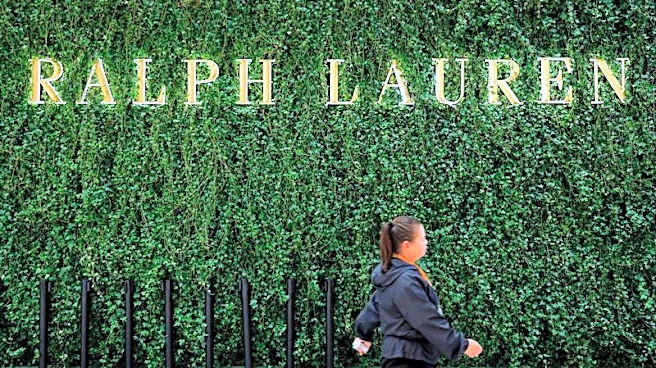
Ralph Lauren Corporation has increased its fiscal 2027 revenue and margin forecasts after reporting a 10% rise in second-quarter sales. This growth was primarily fueled by a 28% increase in Asia and sustained demand for full-price products. Chief Financial
Officer Justin Picicci stated that the company's Q2 results surpassed expectations for both revenue and profitability. The company now anticipates full-year constant-currency revenue growth of approximately 6% to 7% on a 52-week comparable basis, an increase from its previous forecast of 5% to 6%. This updated outlook reflects a more optimistic view for the second half of the fiscal year, although growth is expected to moderate due to tougher comparisons, wholesale shipment timing, and planned reductions in lower-priced sales. Asia remains a key growth driver, with sales in China increasing by over 35%, and Japan and Korea also showing double-digit growth. North America saw a 6% revenue increase, while Europe experienced a 3% rise, though its full-year forecast was lowered due to consumer traffic pressure.
Why It's Important?
This positive financial outlook from Ralph Lauren signals resilience in the premium lifestyle product market, particularly within the luxury apparel sector, despite broader economic uncertainties. The company's ability to achieve significant growth in Asia, especially China, highlights the increasing purchasing power and demand for luxury goods in these regions. The continued demand for full-price products and an increase in average unit retail prices indicate successful brand elevation strategies and disciplined promotional control, which are crucial for maintaining profit margins in a competitive market. The expansion of adjusted gross margin by 220 basis points to 70.2% demonstrates effective cost management and pricing strategies. This performance could influence investor confidence in the luxury retail segment and potentially encourage other brands to focus on similar strategies of brand elevation and targeted regional expansion, particularly in high-growth Asian markets, to counter potential slowdowns in Western markets.
What's Next?
Ralph Lauren expects marketing investment to account for approximately 8% to 8.5% of fiscal 2027 sales, indicating a continued focus on brand building and customer acquisition. For the third quarter, which includes the critical holiday selling period, the company projects constant-currency revenue growth of around 3% to 4% and operating margin expansion of 50 to 70 basis points. This outlook factors in approximately one percentage point of pressure from wholesale timing shifts and planned reductions in off-price sales. The full-year forecast assumes a prevailing U.S. tariff rate of approximately 10% through December, with a return to reciprocal rates in the high teens in the fiscal fourth quarter. The company has also completed its fiscal 2027 share buyback plans, repurchasing $250 million in Q2, bringing year-to-date repurchases to $500 million. Future performance will likely depend on sustained demand in Asia, effective management of European market challenges, and the success of its direct-to-consumer strategies.
Beyond the Headlines
Ralph Lauren's performance underscores a broader trend in the luxury market where brand elevation and direct-to-consumer (D2C) expansion are becoming critical for sustained growth amidst evolving consumer behaviors and economic fluctuations. By raising its Average Unit Retail (AUR) by 18% across its D2C network, the company has effectively shielded its margins from external pressures like freight volatility and inflation. This strategy suggests a shift away from reliance on traditional multi-brand wholesale channels towards more controlled and profitable omnichannel ecosystems. The strong digital commerce comparable sales growth globally further reinforces the importance of integrated online and offline retail experiences for high-end consumers. This approach not only enhances brand control and customer relationships but also allows for more agile responses to market changes, setting a potential benchmark for other luxury brands navigating a complex global retail landscape.