




What's Happening?
Procter & Gamble (P&G) plans to reduce its manufacturing and logistics workforce by 20% to 30% by 2030, including contractors. This announcement was made by Chief Product Supply Officer Luc Reynaert at an investor day on November 19. The company is targeting
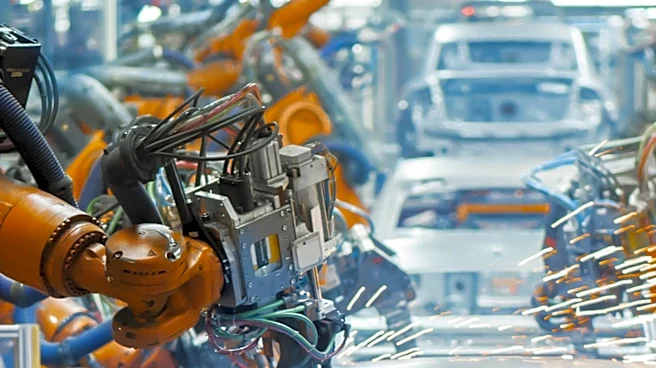
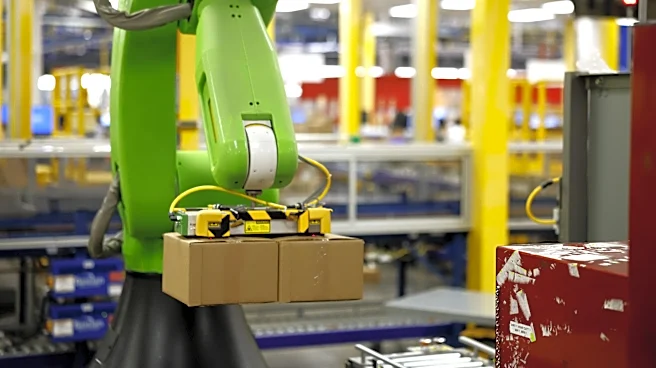
up to $10 billion in company-wide productivity savings between fiscal years 2027 and 2030. This initiative follows an earlier restructuring plan in June 2025 that aimed to eliminate 7,000 office-based positions over two years. P&G has already opened 15 unstaffed facilities and intends to expand this automated model across its logistics network, expecting a 20% improvement in productivity from these sites by 2030. CFO Andre Schulten emphasized that these job cuts are part of a broader strategy to reinvest and grow faster than the market, with a commitment to $1.8 billion in annual productivity savings from the cost of goods sold.
Why It's Important?
This strategic shift by P&G, a major U.S. consumer goods company, signals a significant trend towards automation and cost reduction within the manufacturing and logistics sectors. The planned workforce reduction of up to 30% could impact thousands of employees and contractors, reflecting a broader industry move to mitigate rising input costs, such as raw materials, energy, and freight. P&G's decision to invest heavily in unstaffed facilities and AI-driven operations highlights a future where technology plays an increasingly dominant role in production and supply chains. While the company aims for substantial savings and market growth, the move raises questions about the balance between profitability and employment, and how other companies might follow suit to remain competitive. The success of P&G's strategy, particularly its impact on core gross margin and innovation, will be closely watched by investors and industry analysts.
What's Next?
P&G's financial performance in the coming quarters, particularly its core gross margin, will be a key indicator of the success of its cost-cutting and automation strategies. The company's outlook assumes Brent crude at $100 a barrel, and any fluctuations in commodity prices could further influence its plans. The implementation of the workforce reduction will occur gradually until 2030, allowing time for the company to transition to more automated operations. CEO Shailesh Jejurikar's vision of P&G as the 'consumer packaged goods company of the future,' leveraging consumer-profile databases and AI, suggests continued investment in technological advancements. The company also plans over $10 billion in dividends and approximately $5 billion in buybacks in fiscal year 2027, indicating a commitment to shareholder returns despite the significant operational changes.
Beyond the Headlines
The aggressive automation and workforce reduction strategy by P&G could set a precedent for other large U.S. corporations facing similar pressures from rising costs and the need for increased productivity. This trend has broader societal implications, potentially accelerating the shift towards a more automated economy and raising concerns about job displacement in traditional manufacturing and logistics roles. The ethical considerations of replacing human labor with AI and robotics, even for a company with a long history of dividend increases, will likely become a more prominent discussion. The focus on 'unstaffed plants' and AI integration points to a future where the nature of work itself is fundamentally altered, requiring a reevaluation of workforce development and economic support systems to adapt to these technological advancements.