



What's Happening?
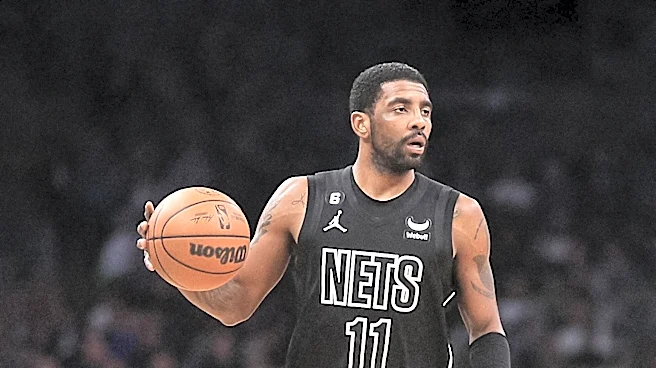
In 2017, the Boston Celtics executed a significant trade, sending Isaiah Thomas, Jae Crowder, Ante Zizic, and draft picks to the Cleveland Cavaliers in exchange for All-Star Kyrie Irving. The trade faced initial complications when Thomas failed his pre-trade
physical due to a hip injury. This led to the Cavaliers threatening to nullify the deal, prompting the Celtics to include additional draft picks to finalize the transaction later that week. Celtics President Danny Ainge commented on the trade at the time, highlighting Irving's proven scoring ability on the NBA Finals stage, his status as an NBA champion, Olympic gold medalist, and four-time All-Star. Ainge expressed confidence that Irving's best years were still ahead of him, despite the difficulty of parting with Thomas. The trade marked a pivotal moment in the Celtics' roster construction, aiming to elevate the team's championship aspirations with Irving's star power.
Why It's Important?
This trade was a high-stakes move for the Boston Celtics, reflecting a common strategy in professional sports to acquire a perceived upgrade in talent, even at the cost of popular and productive players. For the Celtics, acquiring Kyrie Irving, a proven NBA champion and All-Star, was intended to solidify their position as a top contender in the Eastern Conference. The decision to trade Isaiah Thomas, who had become a fan favorite and an instrumental part of the team's success, underscored the organization's commitment to pursuing a championship. The complications arising from Thomas's hip injury during the physical also highlighted the inherent risks and complexities of major sports trades, where player health can significantly impact deal finalization and future performance. This event demonstrates how teams prioritize long-term potential and perceived star power over immediate sentiment, influencing team dynamics, fan expectations, and the competitive landscape of the league.
What's Next?
While the immediate aftermath of the trade saw Kyrie Irving join the Celtics, his tenure in Boston ultimately concluded with his departure. The long-term implications for both franchises involved navigating the performance and team chemistry with their new acquisitions. For the Celtics, the trade was a gamble on Irving's ability to lead them to an NBA championship, a goal that remained elusive during his time with the team. For the Cavaliers, the assets acquired from the Celtics, particularly the draft picks, were intended to aid in their rebuilding efforts post-LeBron James. The trade's impact continued to unfold as players like Thomas dealt with injury setbacks and new team environments, while the draft picks eventually contributed to the development of future rosters. This scenario illustrates the ripple effects of major trades, which can influence team trajectories for several seasons beyond the initial transaction.
Beyond the Headlines
The Kyrie Irving trade also brought to light the intense scrutiny and pressure placed on professional athletes, particularly regarding injuries and contract negotiations. Isaiah Thomas's hip injury, which nearly derailed the trade, sparked discussions about player welfare, team transparency, and the ethical considerations in sports transactions. The narrative surrounding Irving's time in Boston, characterized by high expectations and eventual departure, also reflects the broader challenges of managing superstar personalities and integrating them into existing team cultures. This trade serves as a case study in the delicate balance between athletic performance, business decisions, and public perception in the NBA, influencing how teams approach player acquisitions and manage their rosters in the pursuit of sustained success.