




What's Happening?
General Motors (GM) has confirmed its intention to reintroduce hybrid models into its U.S. vehicle lineup. Mike Anderson, GM's vice president of propulsion engineering, stated that hybrids are part of the company's plan, acknowledging customer demand.
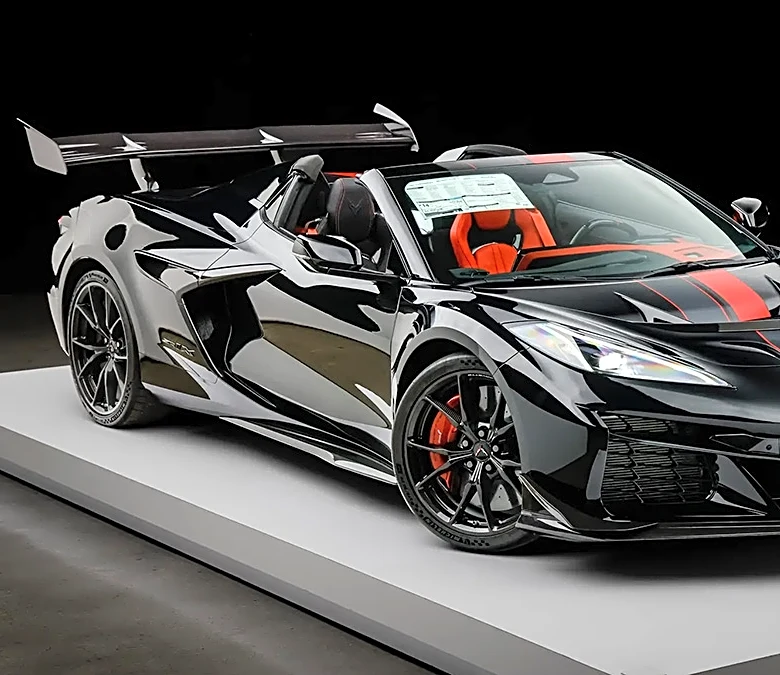
While a specific timeline for their arrival was not provided, hybrids were previously anticipated as early as next year. This move marks a shift for GM, which has largely focused on an 'all-in' strategy for all-electric vehicles over the past decade, with only one hybrid model, a version of the Chevrolet Corvette, currently offered. Anderson emphasized that while the long-term goal remains an all-electric future, the path to achieving it will involve a mix of technologies. This decision comes as hybrid sales have seen a significant increase, with Cox Automotive reporting a 23% rise in Q2 from the previous year, accounting for a record 16.3% of U.S. sales, compared to electric vehicles at approximately 5.8%.
Why It's Important?
GM's decision to re-embrace hybrid technology is significant for the U.S. automotive market and its own strategic direction. It indicates a pragmatic response to evolving consumer preferences and market dynamics, where hybrid demand is currently outpacing that of fully electric vehicles. This strategic adjustment could help GM capture a larger share of the growing hybrid market, potentially boosting sales and revenue. For consumers, it means more diverse options from a major American automaker, bridging the gap between traditional internal combustion engines and fully electric models. The move also suggests that the transition to an all-electric future might be more gradual and multi-faceted than initially projected by some manufacturers. Competitors like Ford and Stellantis have already leveraged suppliers to accelerate their hybrid offerings, and GM's approach, which will combine in-house and external technology, reflects a competitive adaptation to this trend. This could also impact the broader supply chain for hybrid components and technologies within the U.S.
What's Next?
The immediate next step for General Motors will be to announce specific hybrid models and their launch dates. Investors and consumers will be closely watching for these details, as the company has not yet provided a timeline. GM's vice president of propulsion engineering, Mike Anderson, indicated that the company aims to deliver what customers want quickly, suggesting that announcements could be forthcoming. The company's core business is reported to be strong, with Q2 revenue at $48 billion and adjusted EBIT at $3.9 billion, and North America margin within its target range. GM also raised its 2026 guidance for adjusted EBIT to $14 billion to $16 billion and adjusted EPS to $12 to $14. The introduction of new hybrid models, alongside the upcoming Silverado and Sierra trucks in December, is expected to contribute to the company's strong position for 2027. The market will also be observing how GM integrates these new hybrid offerings with its ongoing commitment to an all-electric future and how it balances in-house development with external technology partnerships.
Beyond the Headlines
GM's pivot back to hybrids, even while maintaining a long-term all-electric vision, highlights a broader industry challenge: the pace and pathway of the automotive transition. This decision underscores the complexities of consumer adoption, infrastructure development, and technological readiness that influence the shift away from fossil fuels. It suggests that a 'one-size-fits-all' approach to electrification may not be viable in the near to medium term, and that a diversified powertrain strategy, including hybrids, is crucial for market relevance and profitability. This could also have implications for environmental policy discussions, as it acknowledges the role of transitional technologies in reducing emissions while full EV adoption matures. Furthermore, it could influence investment in research and development, potentially leading to innovations in hybrid powertrains that offer improved efficiency and performance. The move also reflects a deeper understanding of market segmentation, recognizing that different consumers have varying needs and preferences regarding vehicle technology, range anxiety, and charging infrastructure availability.