







What's Happening?
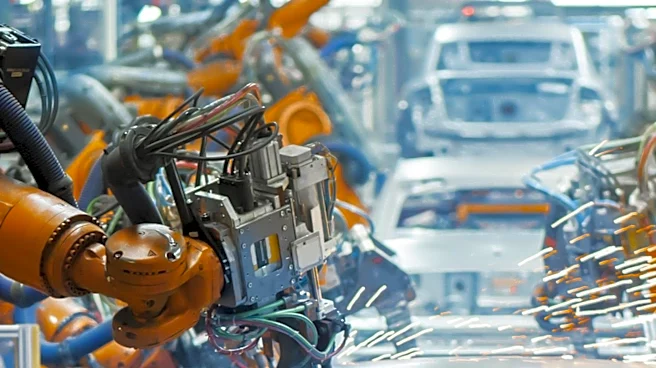
In June, the U.S. manufacturing sector experienced a rise in activity, driven by companies front-loading new orders in anticipation of potential shortages and rising prices. According to S&P Global, the preliminary Manufacturing PMI increased to 55.7,
marking the highest level since May 2022. This growth was accompanied by an uptick in the services PMI, which rose to 51.3 from 50.7 in May, lifting the U.S. composite PMI to 52.2. Despite the increase in manufacturing activity, factory employment fell to a six-year low due to rising operating costs linked to the ongoing conflict in the Middle East. The war between the United States, Israel, and Iran has disrupted global supply chains, leading to higher prices for oil-related goods, aluminum, and fertilizers. Additionally, supplier lead times have lengthened, and the prices paid by factories for inputs have decreased slightly, although inflation at factory sites remains high.
Why It's Important?
The rise in U.S. manufacturing activity highlights the sector's resilience amid global supply chain disruptions and rising input costs. However, the decline in factory employment raises concerns about the sustainability of this growth. The ongoing conflict in the Middle East continues to exert pressure on supply chains, contributing to higher prices and potential shortages. This situation underscores the need for careful economic management, as sustained high inflation could prompt the Federal Reserve to raise interest rates. The manufacturing sector's performance is crucial for the U.S. economy, as it accounts for a significant portion of economic activity. The current dynamics of rising demand and inventory management, coupled with cost pressures and weak employment, highlight the challenges facing the sector and the broader economy.
What's Next?
Looking ahead, the U.S. manufacturing sector will need to navigate the challenges of rising input costs and supply chain disruptions. The potential for further interest rate hikes by the Federal Reserve could impact economic growth and employment. Additionally, the ongoing conflict in the Middle East may continue to affect global supply chains and commodity prices. Policymakers and industry leaders will need to monitor these developments closely to ensure economic stability. The manufacturing sector's ability to adapt to these challenges will be critical in maintaining its contribution to the U.S. economy.