









What's Happening?
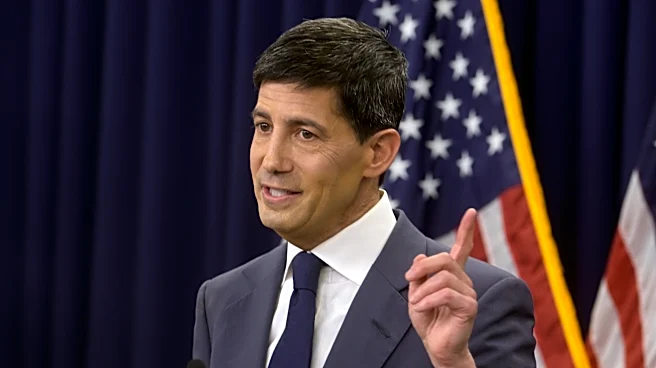
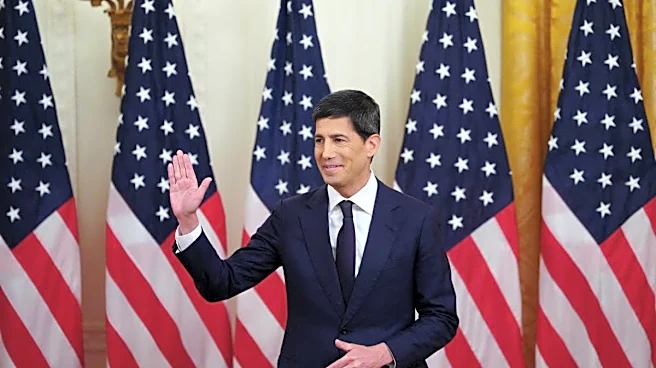
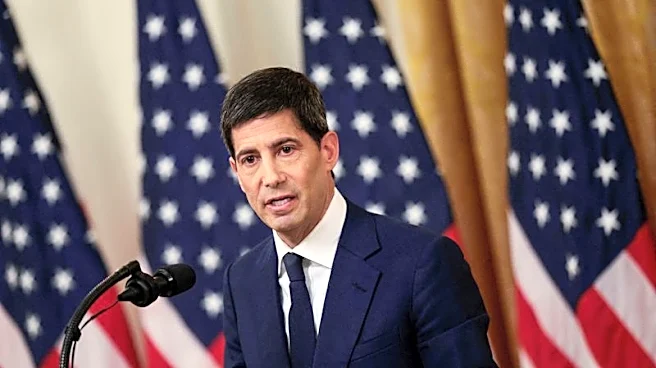
The U.S. Federal Reserve, under the leadership of Kevin Warsh, has decided to maintain interest rates at 3.50% to 3.75% during its latest meeting. This decision marks Warsh's first major policy move as the new chair. The Fed also raised its year-end inflation
expectations to 3.6% from the previous 2.7% forecast in March. This adjustment reflects ongoing concerns about inflation, which has been exacerbated by rising energy prices due to the conflict in the Middle East. The Fed's decision to hold rates steady was unanimous, a first in a year, and comes amid pressure from President Trump for rate cuts. Despite the high inflation rate of 3.8% in April, the Fed is cautious about making immediate changes, opting instead to monitor the situation closely.
Why It's Important?
The Federal Reserve's decision to hold interest rates steady while raising inflation expectations is significant for several reasons. It highlights the central bank's cautious approach in balancing inflation control with economic growth. The decision impacts various sectors, including consumer borrowing costs, which remain high, affecting mortgages, credit cards, and auto loans. The Fed's stance also signals potential future rate hikes, which could further influence economic activity and market stability. The move is particularly noteworthy as it sets the tone for Warsh's leadership and the Fed's future policy direction amid geopolitical tensions and domestic economic challenges.
What's Next?
Looking ahead, the Federal Reserve is expected to continue monitoring inflation and economic indicators closely. The possibility of a rate hike by the end of 2026 remains on the table, depending on how inflation and economic conditions evolve. The Fed's future decisions will likely be influenced by ongoing geopolitical developments, particularly the situation in the Middle East, and domestic economic performance. Stakeholders, including businesses and consumers, will be watching closely for any signals from the Fed regarding its next moves, as these will have significant implications for financial markets and the broader economy.