



What's Happening?
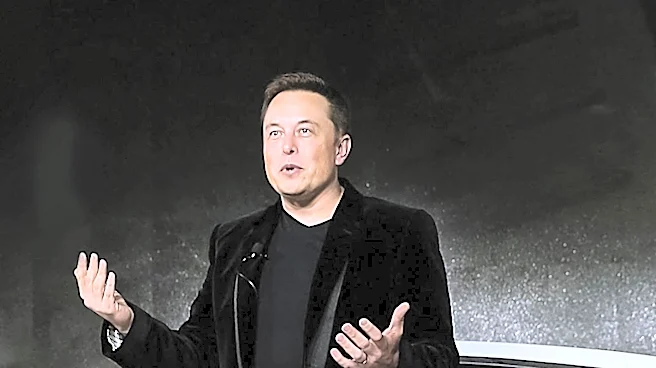
Elon Musk, CEO of Tesla, continues to promote the company's Full Self-Driving (FSD) system as a safer mobility solution for senior citizens, sharing videos of elderly drivers using the technology. In communities like The Villages, Florida, some Tesla owners
report using FSD for a significant portion of their daily driving. However, Tesla's own documentation, including its support page and owner's manual, explicitly states that FSD (Supervised) is an advanced driver assistance system requiring a fully attentive driver who is ready to take over at all times. Researchers and experts, including Birsen Donmez from the University of Toronto and Johnathon Ehsani from Johns Hopkins, express concerns that the system's name could be misleading and that its use by seniors, particularly those with impaired driving abilities, is not well understood or adequately studied.
Why It's Important?
Musk's promotion of FSD for seniors highlights a significant ethical and safety debate surrounding autonomous driving technology. While the technology offers potential benefits for maintaining independence, particularly for an aging population, the disclaimers from Tesla and warnings from experts underscore a critical gap between marketing claims and operational realities. This situation poses risks for consumers, especially vulnerable populations, and could lead to increased accidents if drivers over-rely on the system. The lack of clear understanding regarding how seniors interact with FSD also presents a challenge for regulators and policymakers in developing appropriate guidelines and safety standards for advanced driver-assistance systems.
What's Next?
The ongoing debate is likely to intensify as autonomous driving technology advances and its adoption grows. Regulators may face increased pressure to clarify the legal and safety responsibilities associated with FSD and similar systems, potentially leading to stricter regulations on marketing and usage. Tesla and other manufacturers will need to balance innovation with clear communication about system limitations and driver responsibilities. Further research into human factors, particularly how different demographics interact with semi-autonomous vehicles, will be crucial to ensure safe deployment. Families of elderly drivers will also need to carefully consider the implications of FSD, asking whether a parent could safely operate a vehicle without the assistance system, given the current requirements for driver attentiveness.
Beyond the Headlines
The discussion around FSD for seniors touches on broader societal issues related to aging, independence, and the role of technology in daily life. The 'grieving process' associated with giving up driving, as noted by Jennifer Crawley of the Maryland Department of Aging, reveals the deep emotional connection many individuals have to their mobility. FSD, therefore, taps into a powerful desire to maintain autonomy, but this desire must be weighed against safety. The potential for technology to create a false sense of security is a significant concern, especially when the system's name implies full autonomy while its operational requirements demand constant human supervision. This scenario highlights the complex interplay between technological advancement, human psychology, and public safety, prompting a re-evaluation of how we integrate advanced systems into critical aspects of life.