



What's Happening?
Wyc Grousbeck, a long-standing figure in the Boston Celtics organization, continues to be involved despite recent ownership changes. This continuity is highlighted in contrast to the frequent ownership shifts experienced by other NBA stars, such as Luka
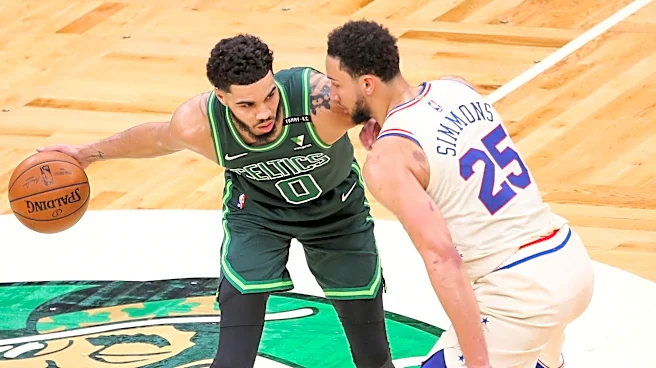
Doncic. Grousbeck's consistent presence is cited as a factor contributing to the stability enjoyed by Celtics player Jayson Tatum throughout his career. Tatum, drafted in 2017, has benefited from an organization where many key personnel, including Grousbeck and figures like Brad Stevens, have remained in their roles or transitioned within the franchise. This stability extends to the front office, with individuals like Mike Zarren, Vice President of Basketball Operations, having a long tenure, starting as an intern and becoming an assistant general manager in 2003-04. Even coaching changes for Tatum have been limited, with only three head coaches during his time in Boston.
Why It's Important?
The sustained involvement of figures like Wyc Grousbeck in the Boston Celtics organization underscores the value of continuity in professional sports franchises. This stability can significantly impact player development and team performance, as evidenced by Jayson Tatum's career trajectory. A consistent organizational structure, from ownership to front office and coaching staff, provides a stable environment that allows players to focus on their game without the added pressure of frequent leadership changes. This contrasts sharply with situations where players experience multiple ownership and management shifts, which can create uncertainty and potentially hinder long-term team building. For the Celtics, this continuity has fostered an 'elite operation' and contributed to their success, including reaching the NBA Finals. It suggests that a stable leadership core can be a critical asset in achieving sustained competitive advantage in the highly dynamic landscape of professional sports.
What's Next?
The continued involvement of Wyc Grousbeck and other long-tenured personnel suggests a commitment to maintaining the established organizational culture and operational efficiency within the Boston Celtics. This stability is likely to continue benefiting key players like Jayson Tatum and the team as a whole, potentially fostering further success on the court. The Celtics' model of continuity could serve as a case study for other sports franchises seeking to build and maintain a successful team over the long term. Future developments will likely focus on how this stable foundation translates into continued competitive performance and potential championship contention. The organization's ability to retain key figures and maintain a consistent vision will be crucial in navigating future challenges and opportunities in the NBA.
Beyond the Headlines
The narrative surrounding Wyc Grousbeck's continued involvement with the Celtics highlights a broader discussion about the impact of organizational stability versus frequent change in professional sports. While some argue that new ownership can inject fresh perspectives and capital, the Celtics' experience suggests that continuity, particularly from figures deeply invested in the team's history and culture, can be equally, if not more, beneficial. This stability can foster a strong sense of identity and loyalty within the organization, from players to staff, and can contribute to a more cohesive and resilient team. It also raises questions about the long-term effects of rapid ownership changes on player morale and team performance, as seen in the contrasting situation of Luka Doncic. The Celtics' approach, characterized by consistent leadership, offers a model for how established relationships and a shared vision can contribute to enduring success in a highly competitive industry.