





What's Happening?
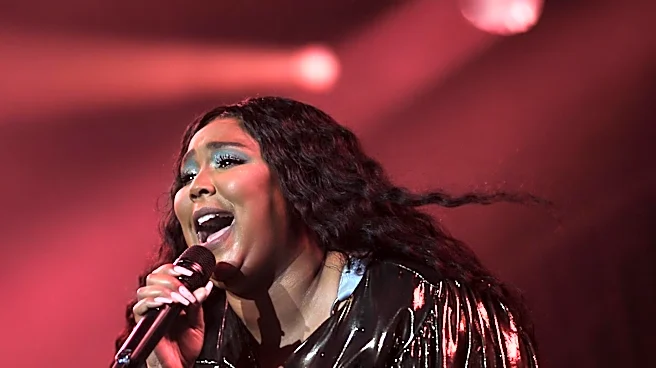
Lizzo, the Grammy-winning artist known for hits like "Truth Hurts" and "Good As Hell," has experienced a significant downturn in her music career, with recent releases failing to achieve commercial success. Her latest album, "Bitch," did not chart on
the Billboard 200, and its singles did not appear on the Hot 100. This follows a series of unsuccessful singles and a rap-centric mixtape, "My Face Hurts From Smiling," which also failed to reignite her career. The artist has attributed some of these struggles to streaming-service algorithms. This decline comes after a period of high visibility and success, including a Record Of The Year Grammy win for "About Damn Time" in 2023. However, lawsuits filed by former dancers alleging sexual harassment and a hostile work environment have significantly impacted her public image and career trajectory, despite her denials.
Why It's Important?
Lizzo's recent struggles highlight the volatile nature of fame and public perception in the entertainment industry, particularly for artists who build their brand on a specific image. Her fall from grace, exacerbated by legal challenges and a perceived shift in cultural tides, demonstrates how quickly an artist's commercial viability can diminish. This situation could influence how other public figures manage their personal brand and respond to allegations, as the contrast between Lizzo's self-empowerment image and the accusations against her has been particularly damaging. The music industry may also observe how streaming algorithms and social media trends, like TikTok challenges, can initially propel artists to stardom but offer little sustained support when public sentiment shifts. This case serves as a cautionary tale about the fragility of celebrity in the digital age, where public scrutiny is intense and unforgiving.
What's Next?
The ongoing lawsuits against Lizzo are expected to continue working their way through the legal system, which will likely keep her public image under scrutiny. Her ability to regain commercial success will depend on several factors, including the outcomes of these legal battles and her strategy for re-engaging with her audience. While she has not officially 'quit' music, her recent statement about being 'tired of all the negative attention' suggests a potential re-evaluation of her career path. The music industry will be watching to see if Lizzo can navigate these challenges and produce new material that resonates with listeners, or if her career will continue to be overshadowed by past controversies and declining chart performance. The possibility of a 'comeback' remains, but it would likely require a significant shift in public perception and a successful re-branding effort.
Beyond the Headlines
Lizzo's career trajectory raises deeper questions about the expectations placed on public figures, especially those who champion specific social messages. Her initial success was tied to an image of body positivity and self-love, which made the subsequent allegations of misconduct particularly jarring for her fanbase and the wider public. This situation underscores the ethical dilemma faced by consumers and the media when an artist's personal conduct appears to contradict their public persona. It also highlights the power of social media and viral trends in shaping an artist's career, both positively and negatively. The rapid rise and fall of Lizzo's commercial success could signal a broader cultural shift where authenticity and perceived integrity are increasingly critical for sustained celebrity, beyond just musical talent. The incident also touches on the challenges artists face in maintaining relevance in a fast-paced, algorithm-driven music landscape.