







What's Happening?
Werner Enterprises, a prominent transportation and logistics company, announced its third-quarter 2026 financial results, meeting Wall Street's expectations for both revenue and non-GAAP profit. The company reported revenue of $950.5 million, marking
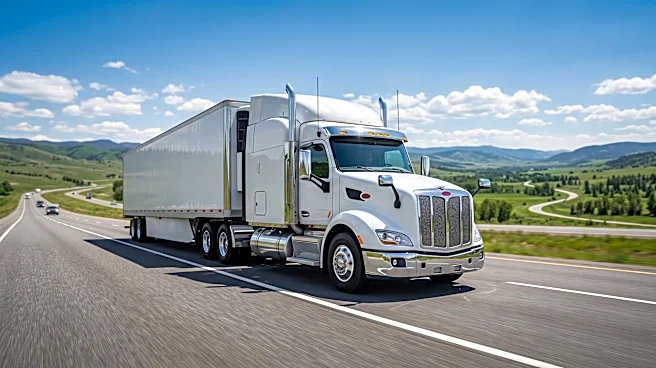
a 23.2% year-on-year growth, and an adjusted EPS of $0.16 per share, aligning with analyst consensus estimates. Despite these figures, the market reacted negatively due to persistent margin pressures. Management identified several factors contributing to these pressures, including sharply rising fuel costs, increased expenses related to driver onboarding and retention, and negative developments in insurance reserves. CEO Derek Leathers characterized these cost headwinds as temporary, asserting they do not alter the fundamental trajectory of the business. He also highlighted the company's intentional acceleration of driver investments to support fleet expansion and meet customer demand. The Dedicated business segment experienced significant growth, adding over 130 net trucks sequentially, driven by robust customer demand and accelerated driver recruitment, with customer retention exceeding 95%.
Why It's Important?
The Q3 2026 performance of Werner Enterprises is significant for the U.S. transportation and logistics sector, as it reflects broader economic trends impacting freight carriers. The company's ability to meet revenue and EPS targets despite substantial cost headwinds demonstrates resilience in a challenging operational environment. However, the negative market reaction to margin pressures underscores investor sensitivity to profitability, even when top-line growth is strong. Rising fuel costs directly affect operational expenses for all trucking companies, potentially leading to higher shipping rates for businesses and consumers. Increased investment in driver onboarding and retention, while necessary for fleet growth and service quality, adds to labor costs, which could further squeeze margins across the industry. The strong growth in Werner's Dedicated fleet and high customer retention rates indicate a stable demand for specialized logistics services, suggesting that companies are prioritizing reliable, long-term transportation partnerships amidst supply chain uncertainties. This trend could benefit carriers with strong dedicated offerings but might put pressure on those relying solely on spot market freight.
What's Next?
Looking ahead, Werner Enterprises' outlook is shaped by continued strategic investments and anticipated market shifts. The company plans to maintain its focus on driver recruitment and fleet expansion, expecting these investments to yield future benefits. Management anticipates that structural supply reductions within the industry, coupled with disciplined pricing strategies, will contribute to future rate increases and a recovery in operating margins. CFO Chris Wikoff indicated that while some cost headwinds might persist into the next quarter, the company's active fleet is currently larger than the third-quarter average, positioning Werner for a multi-year growth cycle. The company also intends to leverage technology investments and operational efficiencies to enhance margins in the coming year. These efforts suggest a proactive approach to mitigating ongoing cost pressures and capitalizing on expected improvements in market conditions, potentially leading to a more favorable financial performance in subsequent quarters.
Beyond the Headlines
The challenges faced by Werner Enterprises, particularly the rising costs of fuel and driver retention, highlight a critical and ongoing issue within the U.S. trucking industry: the persistent driver shortage and the escalating operational expenses. The company's deliberate acceleration of driver investments, while impacting short-term profitability, reflects a long-term strategy to secure essential human capital in a competitive labor market. This trend has broader implications for the national supply chain, as a stable and sufficient driver workforce is crucial for the timely movement of goods. Furthermore, the emphasis on technology investments and operational efficiencies points to a broader industry shift towards automation and data-driven logistics to counteract rising costs and improve service delivery. The negative insurance reserve developments also underscore the increasing financial risks associated with operating large fleets, potentially leading to higher insurance premiums across the sector and impacting overall profitability for transportation companies.