




What's Happening?
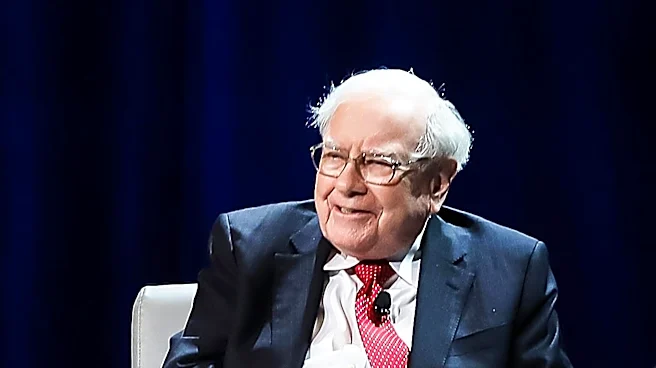
Warren Buffett has repeatedly identified his 1993 acquisition of Dexter Shoe Company as his 'worst deal.' Berkshire Hathaway purchased Dexter Shoe for $433 million, paid entirely in Berkshire stock (25,203 Class A shares). The founder of Dexter, Harold
Alfond, opted for Berkshire shares instead of cash to avoid immediate capital gains taxes. Buffett later admitted that his assessment of Dexter's durable competitive advantage was incorrect, and the company's value quickly plummeted to zero. The decision to pay in Berkshire stock significantly magnified the cost of this failed acquisition for Berkshire shareholders. While Dexter Shoe became worthless, the Berkshire shares received by Alfond have since grown to an estimated $20 billion, making it one of Maine's largest family fortunes, much of which was later committed to the Harold Alfond Foundation.
Why It's Important?
This case serves as a critical lesson in corporate acquisitions and the long-term implications of payment methods, particularly for U.S. businesses and investors. Buffett's regret highlights the inherent risks of stock-for-stock deals, where a failed acquisition can continue to dilute the acquiring company's value if its own stock appreciates significantly. For shareholders of companies that use their stock for acquisitions, this story underscores the potential for their ownership stake to be diminished by poor strategic decisions. It also illustrates the power of long-term compounding in the stock market, as Alfond's decision to accept shares instead of cash led to an extraordinary increase in wealth, which has since been channeled into philanthropic endeavors in Maine, impacting education and other charitable causes.
What's Next?
The Dexter Shoe deal continues to be a cautionary tale for corporate finance and M&A strategies. Companies considering acquisitions, especially those involving stock as payment, will likely scrutinize due diligence processes more rigorously, focusing on truly durable competitive advantages. Investors will continue to evaluate the long-term implications of stock-based acquisitions on shareholder value. The story also reinforces the importance of tax planning in business transactions, as Alfond's initial motivation to defer capital gains ultimately led to a massive fortune. This historical example will likely remain a staple in business education, emphasizing the complexities and potential pitfalls of even seemingly straightforward business deals.
Beyond the Headlines
Beyond the financial implications, the Dexter Shoe saga offers profound insights into the human element of business and philanthropy. Harold Alfond's decision to accept stock, driven by tax considerations, inadvertently created a philanthropic legacy that has significantly benefited the state of Maine. This transformation of a business transaction into a major charitable foundation highlights how individual financial choices can have far-reaching societal impacts. Buffett's candid admission of his 'worst deal' also provides a lesson in humility and accountability for business leaders, demonstrating that even the most successful investors make mistakes. It underscores the idea that while financial losses can occur, the broader consequences, both positive and negative, can extend far beyond the balance sheet.