
What's Happening?
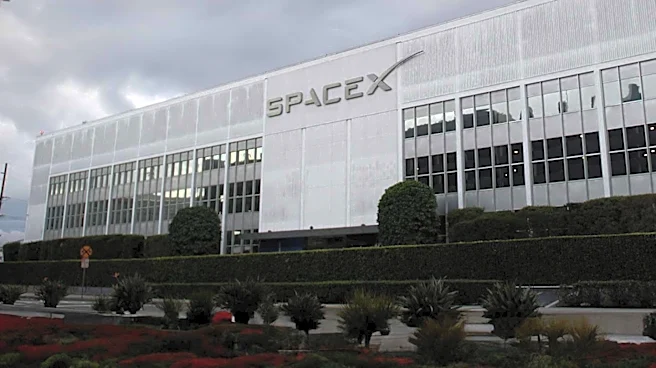
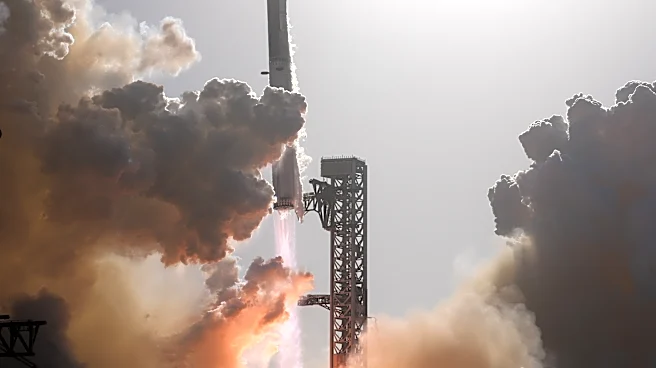
Tesla and SpaceX have announced the groundbreaking of Terafab, a massive semiconductor manufacturing campus in Grimes County, Texas. The project, which involves an initial investment of $16.8 billion, aims to integrate chip manufacturing, packaging, and testing
under one roof. This initiative is part of Elon Musk's strategy to control AI hardware, with the chips expected to power Tesla's Optimus humanoid robots, self-driving vehicles, and SpaceX's orbital data centers. The facility is projected to create at least 3,000 jobs and could eventually expand into a $119 billion mega-campus.
Why It's Important?
The Terafab project represents a significant shift in Tesla and SpaceX's approach to semiconductor production, potentially reducing their reliance on external suppliers and strengthening their position in the AI hardware market. By bringing chip production in-house, the companies aim to secure a competitive edge in the rapidly evolving AI and autonomous vehicle sectors. However, the semiconductor industry is known for its high capital requirements and long lead times before profitability, posing substantial risks alongside the potential rewards.
What's Next?
As the Terafab project progresses, stakeholders will be closely monitoring its development and impact on the semiconductor industry. The success of this venture could influence other tech companies to pursue similar vertical integration strategies. Additionally, the project's expansion and job creation could have significant economic implications for the local community and the broader Texas economy.