


What's Happening?
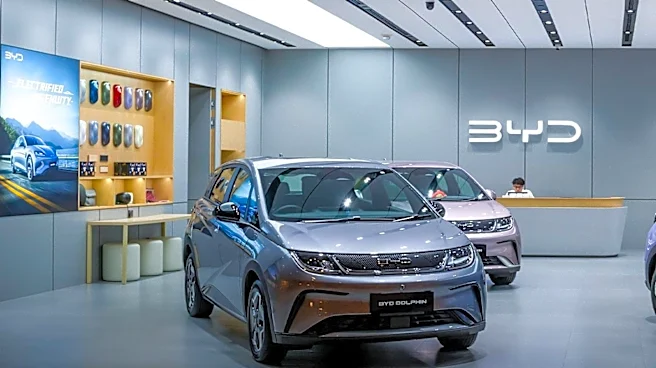
Wang Chuanfu, the CEO of BYD, has issued a stark warning that the Chinese automotive industry is entering a 'brutal elimination phase,' predicting the disappearance of several manufacturers. This declaration comes as BYD, despite being the world's leading
electric vehicle seller with 4.6 million units sold in 2025, experienced its first profit decline in four years. The company's net profit fell by 19% to 32.6 billion yuan (approximately 3.98 billion euros), even as its turnover surpassed 800 billion yuan. This reduction in profitability is attributed to an aggressive price war, with 61% of BYD's vehicles sold for less than 21,000 euros. Furthermore, BYD's market share in China dropped significantly from 27% to 17% in the first two months of 2026, facing intense competition from rivals like Geely, Xiaomi, and XPeng. In response to these domestic challenges, BYD has cut 100,000 jobs, representing 10% of its workforce, and is increasingly focusing on international markets, where exports now account for 38% of its total turnover, up from 28% a year prior.
Why It's Important?
The pronouncement from BYD's CEO signals a significant shift in the global electric vehicle landscape, with potential repercussions for U.S. industries and consumers. The 'brutal elimination phase' in China suggests an intensification of competition and price wars, which could lead to a flood of lower-priced Chinese EVs into international markets, including the U.S., if trade barriers are not sufficiently robust. This could put immense pressure on established U.S. automakers and EV startups, forcing them to either lower prices, innovate faster, or risk losing market share. While consumers might benefit from more affordable EV options, the long-term impact could include job losses in the U.S. automotive sector and a potential decline in domestic manufacturing capabilities. The increased focus of Chinese manufacturers like BYD on exports also highlights a strategic pivot that could challenge the dominance of traditional automotive powers and reshape global supply chains.
What's Next?
The immediate future will likely see continued aggressive pricing strategies within the Chinese EV market, potentially leading to further consolidation as smaller or less competitive manufacturers struggle to survive. For BYD, the strategy of prioritizing international markets will intensify, meaning increased competition for U.S. and European automakers in their home territories and other global markets. Policymakers in the U.S. may face renewed calls to implement or strengthen protectionist measures, such as tariffs or subsidies for domestic production, to safeguard the U.S. auto industry from the influx of lower-cost Chinese EVs. The performance of BYD's export division will be a key indicator of the success of this strategy and could influence other Chinese manufacturers to follow suit, further escalating global competition. The ongoing price war could also accelerate technological advancements as companies strive to differentiate their products beyond just cost.
Beyond the Headlines
The 'elimination phase' described by BYD's CEO points to a deeper structural transformation within the automotive industry, moving beyond traditional competition to a survival-of-the-fittest scenario. This shift has ethical implications regarding labor practices, as evidenced by BYD's significant workforce reduction, and raises questions about the social responsibility of corporations during periods of intense economic pressure. Legally, the increased export focus by Chinese EV manufacturers could trigger new trade disputes and anti-dumping investigations from countries concerned about unfair competition. Culturally, the rise of Chinese EV brands on the global stage challenges the long-held dominance of Western and Japanese automakers, potentially altering consumer perceptions and brand loyalties worldwide. This dynamic also underscores the strategic importance of government industrial policies and subsidies in shaping the future of critical industries like automotive manufacturing.