


What's Happening?
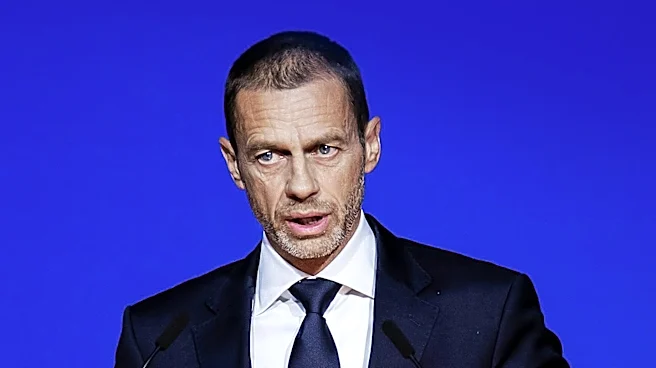
Ireland coach Heimir Hallgrímsson has formally requested UEFA to keep the Irish national team and Israel apart in future competitions following a series of contentious Nations League games. The two teams recently played two matches, with Ireland's 'home'
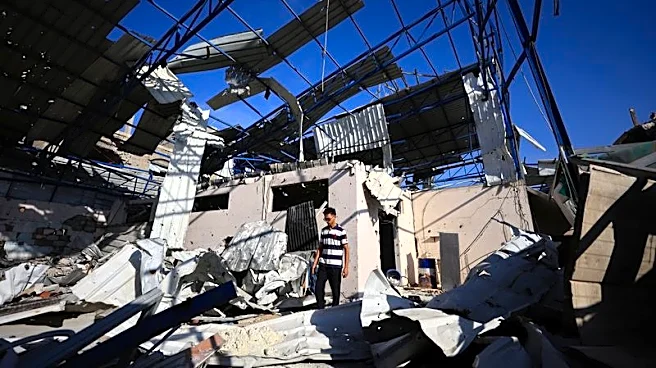
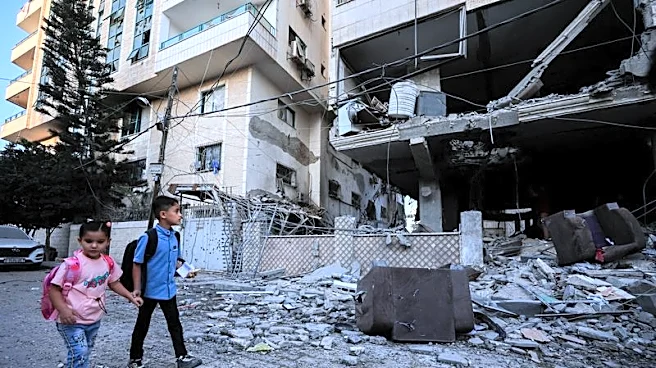
game moved to Serbia and Israel's 'home' game played in Hungary due to ongoing conflicts. The matches were fraught with tension, including calls in Ireland for a boycott of the games due to Israel's actions in Gaza. Irish players wore black armbands and bowed their heads during the Israeli national anthem in both matches, a gesture reciprocated by Israeli players wearing armbands for victims of the October 7, 2023 attacks. Hallgrímsson cited the intense pressure and incidents during the games, including an alleged spitting incident and racial abuse, as reasons for his request.
Why It's Important?
This request by the Irish coach highlights the increasing intersection of sports and geopolitics, particularly concerning the Israeli-Palestinian conflict. It underscores how international sporting events can become platforms for political expression and protest, leading to significant challenges for governing bodies like UEFA. The FAI's previous motion to ban Israel from competitions and the calls for a boycott in Ireland demonstrate a strong public sentiment that can impact sporting decisions and security arrangements. If UEFA accedes to the request, it could set a precedent for separating teams based on political tensions, potentially influencing future draws and competition structures. This situation also reflects the broader societal debate on whether sports should remain apolitical or actively engage with global human rights and political issues.
What's Next?
UEFA will need to consider Ireland coach Heimir Hallgrímsson's request regarding future pairings with Israel. This decision will likely involve balancing sporting integrity, security concerns, and political sensitivities. UEFA's response could range from acknowledging the request without taking formal action to implementing measures to avoid such pairings in future draws. The ongoing geopolitical situation and public sentiment in Ireland and other nations will likely continue to influence discussions around Israel's participation in international sports. Further incidents or protests related to these issues could also pressure UEFA to re-evaluate its policies on managing politically charged matchups in its competitions.
Beyond the Headlines
This incident goes beyond a simple sporting dispute, revealing the deep emotional and political connections that national teams carry. The players' gestures and the coach's request underscore the difficulty of isolating sports from real-world conflicts, especially when public opinion is strongly engaged. It highlights the ethical dilemma faced by sports organizations: whether to enforce strict neutrality or acknowledge the political and humanitarian contexts in which their events take place. The situation also brings to light the potential for sporting events to exacerbate international tensions or, conversely, to serve as a unique platform for dialogue and protest. The outcome of UEFA's consideration could have long-term implications for how international sports bodies navigate politically sensitive matchups and the role of athletes as public figures in global affairs.