





What's Happening?
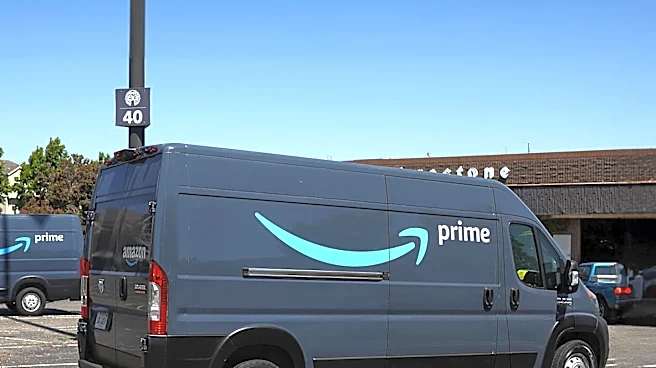
Walmart's recent financial results indicate a significant surge in its e-commerce sales, which jumped 23%, and a 37% increase in ad revenue. Despite these gains, the company's online order fulfillment heavily depends on labor-intensive store pickup, a model
distinct from Amazon's. Walmart's total revenue for the most recent quarter increased by 5.2% to $188.8 billion, with U.S. revenue growing at a slower pace of 3.6% to $124.9 billion. The company leverages its extensive network of 4,600 U.S. stores, which are located within 10 miles of 90% of the American population. However, this broad reach translates to a U.S. operating margin of only 5%. Rising labor and diesel costs are expected to put further pressure on Walmart's operational model.
Why It's Important?
Walmart's reliance on store-fulfilled delivery and pickup for its e-commerce growth highlights a fundamental difference in its operational strategy compared to pure-play online retailers like Amazon. While this model leverages Walmart's vast physical presence, it also introduces challenges related to labor intensity and cost efficiency. The 5% U.S. operating margin suggests that despite its market dominance and extensive reach, profitability in its core U.S. operations remains constrained. As labor and diesel costs continue to climb, Walmart faces increasing pressure to optimize its e-commerce fulfillment processes to maintain or improve margins. This situation underscores the complexities of integrating traditional brick-and-mortar retail with rapidly expanding digital commerce, impacting its competitive stance in the evolving retail landscape.
What's Next?
Walmart will likely continue to invest in optimizing its store-fulfilled delivery and pickup systems to enhance efficiency and reduce labor costs. The company's strategy will need to address the balance between leveraging its physical store assets for online orders and improving the profitability of these operations. As e-commerce continues to grow, Walmart may explore further automation or technological solutions within its stores to streamline the pickup process. The impact of rising operational costs, particularly labor and fuel, will necessitate ongoing adjustments to its supply chain and pricing strategies. The company's ability to differentiate its e-commerce offering while maintaining competitive pricing will be crucial in retaining market share against rivals with different fulfillment models.
Beyond the Headlines
The comparison between Walmart and Amazon often focuses on their e-commerce capabilities, but Walmart's model reveals a deeper strategic challenge: how to effectively monetize its physical infrastructure in the digital age. While its 4,600 stores offer unparalleled proximity to customers, the labor-intensive nature of store-fulfilled orders suggests that this advantage comes with significant operational overhead. This raises questions about the long-term sustainability of relying heavily on in-store labor for online fulfillment, especially as consumer expectations for speed and convenience continue to rise. Walmart's journey reflects a broader industry trend where traditional retailers must innovate to integrate their physical and digital assets seamlessly, balancing accessibility with profitability in an increasingly competitive market.