

What's Happening?
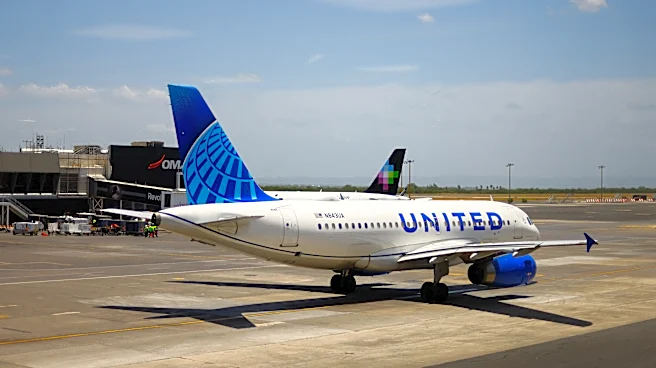
United Airlines is set to experience significant growth at Dulles International Airport (IAD) following a major redevelopment plan. The project, unveiled at the White House, involves a $22.5 billion investment to transform the airport into a world-class
facility. This redevelopment will add approximately 5 million square feet of terminal and concourse space, enhancing United's capacity for both domestic and international flights. The plan includes expanding the main terminal, adding new concourses, and improving passenger facilities. United has already announced nine new routes from IAD, including a notable addition to Cartagena, Colombia. The expansion is expected to increase United's gate count significantly, allowing for more flights and improved passenger experience.
Why It's Important?
The redevelopment of Dulles International Airport is crucial for United Airlines as it seeks to expand its operations and improve passenger services. The project will enable United to accommodate more flights, particularly international routes, which are essential for its growth strategy. The expansion is also expected to alleviate congestion at other hubs like Newark Liberty International Airport, providing more options for travelers. However, the high cost of the project raises concerns about potential increases in airport fees and airfares, which could impact passengers. The redevelopment also poses challenges in preserving the architectural integrity of the iconic main terminal designed by Eero Saarinen.
What's Next?
As the redevelopment progresses, United Airlines will likely continue to announce new routes and services from Dulles International Airport. The project is expected to be completed over the next decade, with various phases of construction and expansion. Stakeholders, including the Metropolitan Washington Airports Authority, will need to balance the need for modernization with the preservation of the airport's historic architecture. Additionally, funding and cost management will be critical to ensure the project's success without imposing excessive financial burdens on airlines and passengers.