
What's Happening?
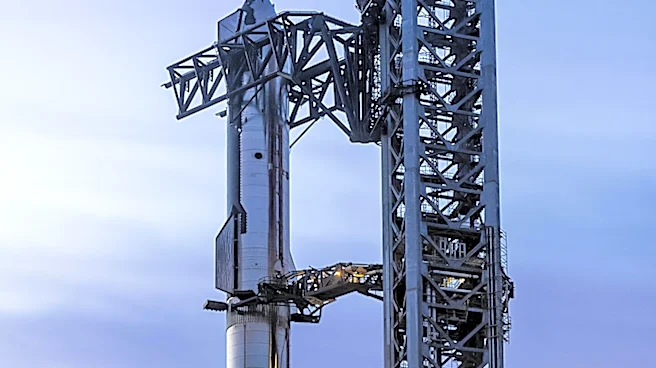
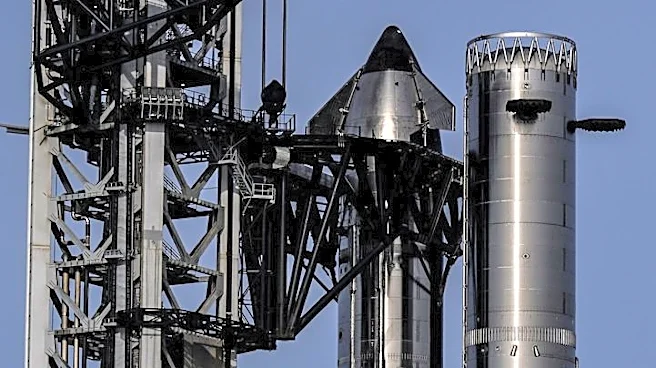
SpaceX's 13th test flight of the Starship rocket successfully launched from Texas, deploying 20 Starlink V3 satellites into orbit. The mission tested a new routine for de-orbiting the Super Heavy booster,
which completed the high thrust portion of the boostback burn but ended with a hard splashdown in the Gulf of Mexico. The Starship itself made a controlled splashdown in the Indian Ocean, gathering essential data on its heatshield performance. This data is vital for ensuring the craft's reusability and simulating future missions that will launch and land at the same facility, enhancing turnaround times for reusable hardware.
Why It's Important?
The test flight's success in deploying satellites and collecting data on the Starship's heatshield is a significant step towards SpaceX's goal of full reusability. This capability is crucial for reducing launch costs and supporting ambitious plans for lunar and Mars missions. The ability to simulate missions that land at the same facility as they launch from could revolutionize the speed and efficiency of space travel. The data collected will help refine the Starship's design, making it a more viable option for future NASA missions, including those under the Artemis program.
What's Next?
SpaceX plans to address the issues encountered with the Super Heavy booster to achieve a successful landing in future missions. The company aims to catch the booster with robot arms at Starbase, further advancing its reusability goals. The next test flight will focus on achieving this milestone, which would mark a significant achievement in aerospace history. SpaceX's continued progress in this area will be closely watched by NASA and other stakeholders in the space industry.