


What's Happening?
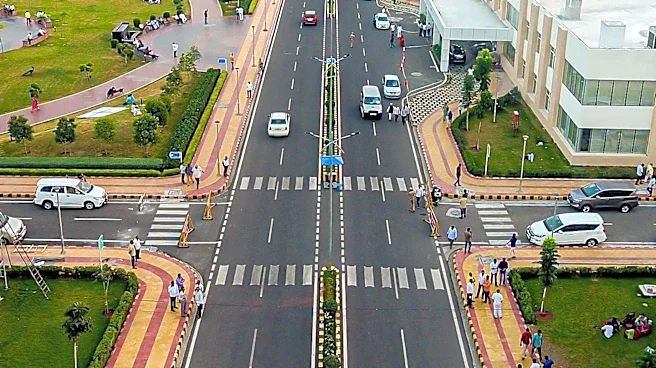
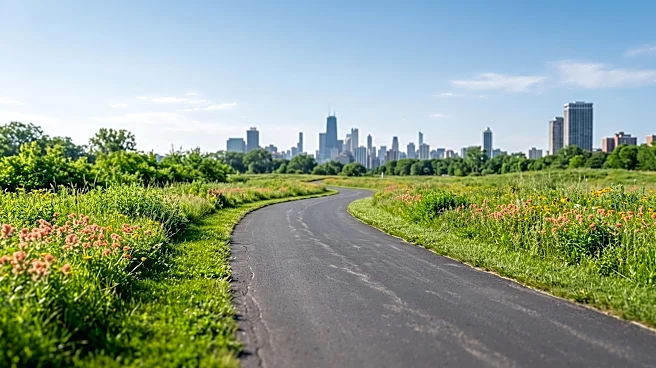
The Department of Municipalities and Transport (DMT) in Abu Dhabi has opened 12 new parks across Al Riyadh City and Shakhbout City, investing over AED 150 million in the project. These new green spaces cover more than 135,000 square meters, equivalent
to 19 FIFA-certified football fields. The initiative is part of Abu Dhabi’s Livability Strategy, aiming to enhance quality of life, strengthen social cohesion, and reinforce the emirate's reputation as a global residential destination. The parks are designed with sustainability in mind, featuring energy-efficient lighting, eco-friendly irrigation systems, and over 3,129 native trees planted across 87,200 square meters of landscaped areas. They offer a wide range of sports and recreational facilities, including padel and multi-use courts, volleyball and badminton areas, cycling tracks, fitness stations, and children's play areas.
Why It's Important?
This significant investment in public green spaces directly impacts the well-being and lifestyle of residents in Al Riyadh City and Shakhbout City. By providing accessible recreational facilities, the DMT aims to promote healthier lifestyles and foster stronger community bonds. The emphasis on sustainable design and native tree planting also contributes to environmental conservation efforts within the emirate. The expansion of green infrastructure aligns with global trends in urban planning that prioritize livability and environmental stewardship, potentially attracting more residents and businesses to Abu Dhabi. This development underscores the government's commitment to creating integrated communities that offer a high quality of life, which can have long-term economic and social benefits for the region.
What's Next?
The opening of these 12 parks follows previous developments, including the reopening of Al Khalidiyah Park in March and the opening of 16 new parks in Al Shamkha and 33 parks in Mohammed Bin Zayed City in 2025. This indicates a continuous effort by the DMT to expand green infrastructure across Abu Dhabi. The Department emphasizes that maintaining these parks is a shared responsibility between the Municipality and the community, suggesting ongoing community engagement and educational initiatives will be crucial for their long-term sustainability. Future plans likely involve further investments in public amenities as part of the AED 42 billion budget announced last year for Abu Dhabi’s Liveability Strategy, aiming to elevate livability standards across all neighborhoods.
Beyond the Headlines
The development of these parks reflects a broader strategic vision for urban development in Abu Dhabi, moving beyond mere infrastructure to focus on holistic community well-being. The integration of sports facilities, children's play areas, and picnic spots encourages outdoor activity and social interaction, which are vital for mental and physical health. The commitment to sustainability, through native tree planting and eco-friendly systems, also positions Abu Dhabi as a leader in environmentally conscious urban planning. This approach could serve as a model for other rapidly developing cities, demonstrating how large-scale urban projects can balance growth with ecological responsibility and community needs. The emphasis on shared responsibility for maintenance also fosters a sense of ownership and civic pride among residents.