





What's Happening?
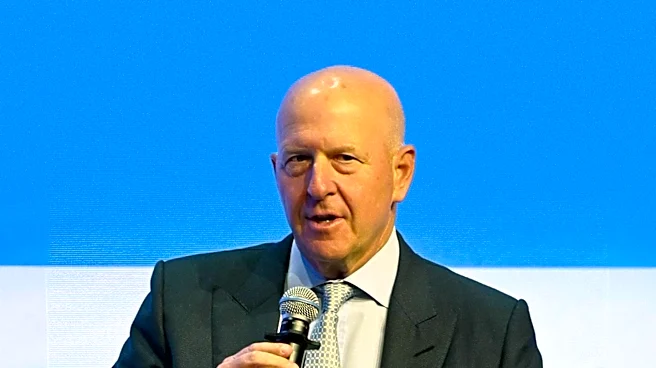
Ant International CEO Peng Yang has advocated for a new 're-globalization' initiative that leverages artificial intelligence (AI) and digital connectivity to provide small and medium-sized enterprises (SMEs) with enhanced access to global markets. Speaking
at the United Nations Trade and Development (UNCTAD) World Investment Forum 2026, Yang highlighted that 'Globalization 1.0' primarily benefited large corporations, leaving many SMEs unable to participate in the global economy. He emphasized that achieving inclusion is crucial for this new phase of globalization, and AI will be a key accelerator by democratizing opportunities. A 2025 survey by the Organisation for Economic Co-operation and Development (OECD) revealed a significant AI adoption gap, with 52% of large firms using AI compared to only 17.4% of small firms. Yang believes that democratizing AI technology can bridge this gap, enabling SMEs to thrive on the global stage. Ant International, which serves over 150 million global merchants, 95% of whom are SMEs, has introduced full-stack AI-native solutions designed to address challenges faced by these smaller businesses.
Why It's Important?
This call for 're-globalization' has significant implications for the global economy, particularly for the U.S. and its vast network of SMEs. If successful, such an initiative could level the playing field, allowing U.S. small businesses to compete more effectively in international markets, potentially boosting exports and economic growth. The current disparity in AI adoption, as highlighted by the OECD, indicates that large U.S. corporations currently hold a significant technological advantage. Democratizing AI tools and digital connectivity could empower millions of U.S. SMEs, fostering innovation and creating new job opportunities. This shift could also lead to a more diversified global supply chain, reducing reliance on a few large players and making the global economy more resilient. For U.S. consumers, increased competition from a wider array of global businesses could lead to more diverse product offerings and potentially lower prices. Conversely, large U.S. enterprises might face increased competition from newly empowered SMEs globally.
What's Next?
The immediate next steps involve continued discussions and collaborations among international organizations, technology providers like Ant International, and governments to develop frameworks and infrastructure that support this 're-globalization' vision. Ant International has already launched AI-native solutions for SMEs, including tools for payment, account management, foreign exchange, and growth. Further development and widespread adoption of these and similar technologies will be crucial. Collaboration between the public and private sectors will be essential to establish common standards and trusted infrastructure for AI use in finance and trade. Regulators will also need to develop appropriate frameworks to ensure the safe and responsible use of AI, particularly as AI agents take on financial and operational tasks for businesses. The success of this initiative will depend on how effectively AI technology can be made accessible and affordable for SMEs worldwide, including those in the U.S.
Beyond the Headlines
Beyond the immediate economic benefits, this 're-globalization' push carries deeper implications for global economic equity and technological development. It challenges the traditional model of globalization, which often concentrated wealth and power among large multinational corporations. By empowering SMEs through AI, there's potential for a more inclusive global economy where economic opportunities are more widely distributed. This could lead to increased economic stability in developing nations and foster entrepreneurship on a global scale. Ethically, it raises questions about ensuring equitable access to AI technologies and preventing a new form of digital divide. Legally, international cooperation will be needed to harmonize regulations around AI, data privacy, and cross-border transactions to create a seamless and secure environment for SMEs. Culturally, it could foster greater cross-cultural business interactions and understanding as more diverse businesses engage in global trade, potentially leading to a more interconnected and interdependent world economy.