









What's Happening?
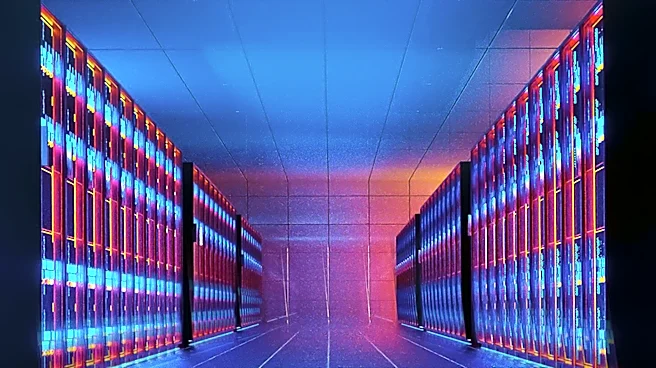
Architects are exploring innovative ways to utilize the excess heat generated by AI data centers to benefit local communities. Forma, a New York-based architecture studio, has proposed the 'Pink Thermal Baths' concept, which envisions using the heat from
data centers to warm public bathhouses. This idea is part of a broader trend where architects are rethinking the role of data centers in society, especially as these facilities become more prevalent near residential areas. The concept aims to transform the traditional linear model of data centers, where electricity is consumed and heat is expelled, into a circular model that repurposes waste heat for public use. This approach is gaining attention as data centers, which have historically supported banks and cloud services, are now increasingly seen as part of strategic infrastructure.
Why It's Important?
The significance of this development lies in its potential to address community concerns about the environmental and social impacts of data centers. As these facilities expand, particularly in areas like Virginia, they have faced opposition due to noise, water usage, and increased electricity demands. By repurposing waste heat for community benefits, architects aim to mitigate some of these negative impacts and foster a more symbiotic relationship between data centers and their host communities. This approach could lead to more sustainable urban planning and infrastructure development, aligning with broader environmental goals and enhancing public acceptance of data centers.
What's Next?
The next steps involve collaboration between architects, local governments, and developers to implement these innovative concepts. This includes building the necessary infrastructure, such as district heating networks, to support the repurposing of data center heat. Additionally, there is a need to address security and backup power requirements, which may pose challenges to the feasibility of these projects. As the debate continues, architects are also considering alternative designs for data centers that prioritize community needs and environmental sustainability over corporate demands.
Beyond the Headlines
Beyond the immediate implications, this development raises questions about the future of data center design and its alignment with community and environmental priorities. It challenges the traditional blueprint of data centers, suggesting a shift towards facilities that cater to diverse 'ecologies of data' and community needs. This could lead to a reevaluation of how data centers are integrated into urban environments, potentially influencing policy and regulatory frameworks. The conversation also touches on broader ethical considerations regarding the allocation of resources and the role of technology in society.