
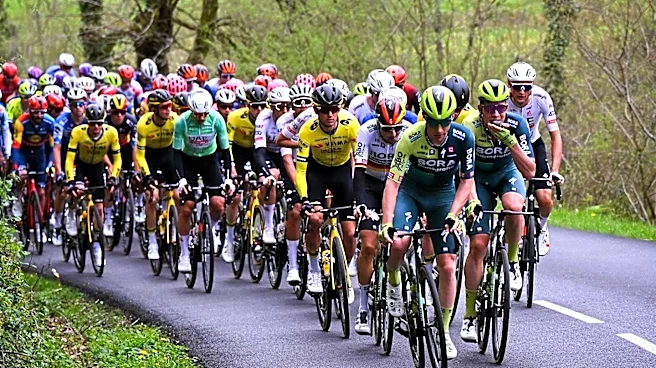


What's Happening?
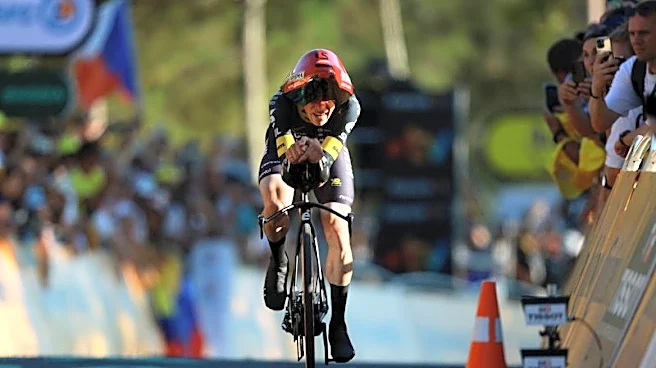
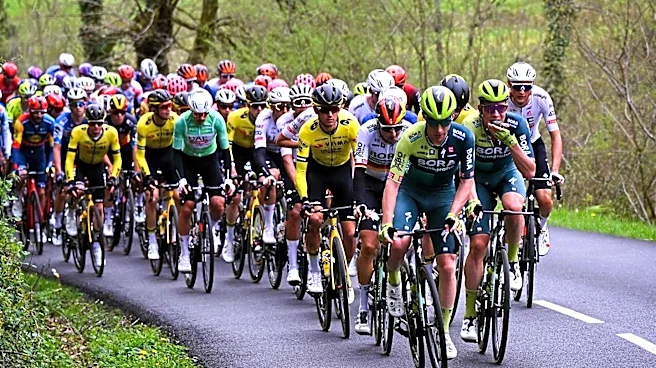
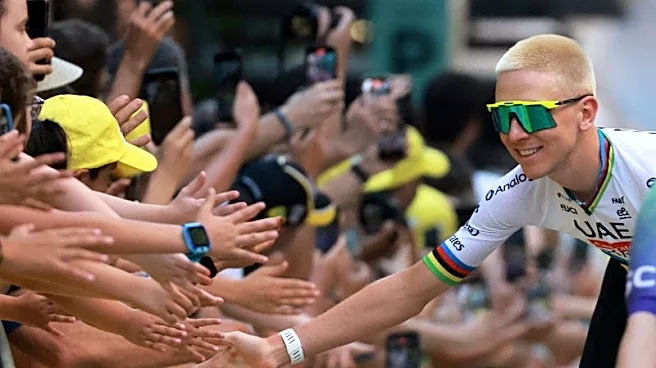
The Tour de France commenced with its opening stage in Barcelona, Spain, where Jonas Vingegaard took an early lead over his rival Tadej Pogačar. Vingegaard, riding for the Visma-Lease a Bike team, excelled in the 12.1-mile team time trial, securing a 12-second
advantage over Pogačar and his UAE Team Emirates-XRG. This stage marked the return of the team time trial to the Tour since 2019, with a new format allowing individual timing for each rider. Vingegaard's team performed strongly, setting him up for a solo finish, while Pogačar, a four-time Tour winner, remains a strong contender. The race will continue through the French Pyrenees and culminate at the Champs-Élysées in Paris.
Why It's Important?
The early lead by Jonas Vingegaard sets a competitive tone for the Tour de France, highlighting the intense rivalry between him and Tadej Pogačar. Vingegaard's performance underscores his potential to challenge Pogačar's dominance, as he aims to complete the Giro-Tour double. The new team time trial format could influence team strategies, emphasizing individual performances. This development is significant for cycling enthusiasts and stakeholders, as it may impact team dynamics and sponsorships. The outcome of this race could also affect the careers and marketability of the cyclists involved, particularly in the context of professional cycling's global audience.
What's Next?
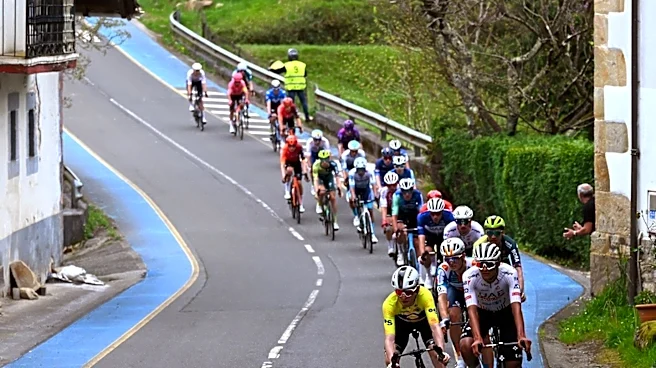
As the Tour de France progresses, the competition is expected to intensify, especially as the race moves into the challenging terrains of the French Pyrenees and the Alps. Key stages, such as the climb at Alpe d'Huez, will be crucial for contenders like Vingegaard and Pogačar. Teams will need to strategize effectively to maintain or gain positions. The final stage in Paris will be pivotal, potentially determining the overall winner. Observers will watch for any shifts in team tactics or individual performances that could alter the race's outcome.