






What's Happening?
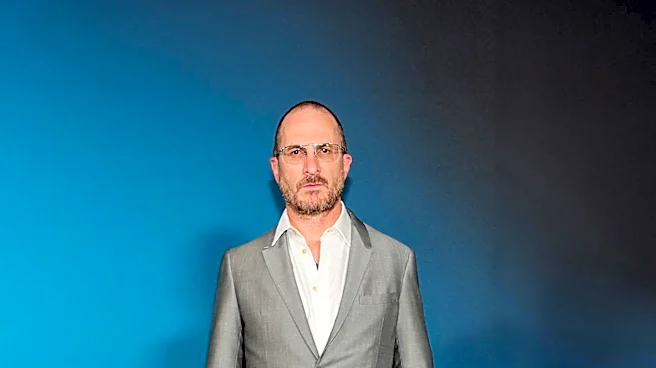
Darren Aronofsky's company, Primordial Soup, a partner with Google DeepMind, has successfully raised over $11 million in funding. This development occurs as AI-first studios are increasingly impacting the film industry by significantly reducing production
costs and accelerating timelines. For instance, Utopai Studios, which recently secured $60 million at a $1 billion valuation, claims AI can cut scene planning and CGI costs by 80 to 90 percent. These AI platforms can break down scripts into scenes and shots, transforming months of pre-production work into a matter of days. Other companies like Promise, backed by Peter Chernin and Andreessen Horowitz, are also operating their own AI production systems, with Promise participating in Disney's 2026 Accelerator. Natasha Lyonne's Asteria is also venturing into hybrid feature films using 'clean' AI models, highlighting a broader industry shift towards integrating artificial intelligence into filmmaking.
Why It's Important?
The influx of funding into companies like Primordial Soup and the rise of AI-first studios signal a significant transformation within the U.S. film industry. The ability of AI to drastically cut costs and accelerate production schedules could democratize filmmaking, allowing more independent creators and smaller studios to produce high-quality content. This shift could challenge established production companies that rely on traditional, more expensive methods. While incumbent studios still possess valuable assets like track records and talent relationships, the financial and temporal efficiencies offered by AI could compel them to adapt or risk being outcompeted. The increased efficiency could also lead to a higher volume of content, potentially altering the landscape of film distribution and consumption. This technological advancement could redefine economic models within Hollywood, impacting jobs, investment strategies, and the creative process itself.
What's Next?
The film industry is likely to see continued investment in AI-driven production technologies, with more studios exploring hybrid models that combine human creativity with AI efficiency. Established production companies will face increasing pressure to integrate AI into their workflows to remain competitive, potentially leading to new training programs for existing teams or the formation of specialized AI production units. The success of AI-first studios in attracting A-list talent, as seen with Utopai casting Antonio Banderas, suggests that the gap between traditional and AI-driven productions in terms of star power may narrow. Buyers and financiers are expected to increasingly demand the cost and time efficiencies offered by AI, pushing the entire industry towards adopting these new paradigms. This could lead to a rapid evolution in how films and series are budgeted, developed, and brought to market.
Beyond the Headlines
The rise of AI in film production raises profound questions about the future of creative roles and intellectual property in the entertainment industry. While AI can streamline technical aspects, the ethical implications of AI-generated content, particularly concerning originality and authorship, will become more prominent. The potential for AI to generate vast amounts of content quickly could also lead to market saturation, making it harder for individual projects to stand out. Furthermore, the shift towards AI-driven production could exacerbate the digital divide within the industry, favoring those with access to advanced technology and capital. Legal frameworks around AI-created works, including copyright and fair use, will need to evolve rapidly to address these emerging challenges, potentially reshaping the legal and cultural landscape of storytelling.