







What's Happening?
Oil prices experienced a modest increase on Friday, ahead of the U.S. Independence Day holiday weekend, as optimism grew over peace efforts between the United States and Iran. Brent crude futures rose by 0.24% to $72.10 a barrel, while West Texas Intermediate
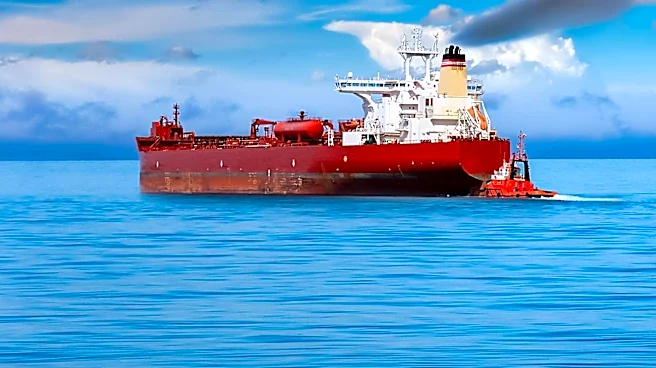
increased by 0.20% to $68.83 a barrel. This rise comes after both benchmarks hit their lowest levels since the U.S.-Israeli conflict with Iran began in late February. The market remains cautiously optimistic, with analysts like Tim Waterer from KCM Trade noting that while there is hope for sustained peace, the market is still waiting for concrete evidence of stability. The reopening of the Strait of Hormuz, a critical passage for global oil and liquefied natural gas, has been a significant factor in the recent developments. Kuwait has notably increased its oil production to 1.65 million barrels per day in June, up from 580,000 barrels per day in May, following the U.S.-Iran interim peace agreement. Additionally, Saudi Arabia has dispatched five supertankers carrying 10 million barrels of oil through the Strait, with Saudi Aramco adopting spot pricing to expedite sales in Asia.
Why It's Important?
The slight rise in oil prices reflects a broader market sentiment that peace efforts in the Middle East could stabilize oil supply routes, particularly through the Strait of Hormuz, which is vital for global energy distribution. The U.S.-Iran peace efforts, if successful, could lead to a more stable geopolitical environment, reducing the risk of supply disruptions that have historically led to price volatility. For the U.S., a stable oil market could mean more predictable energy costs, benefiting industries reliant on oil and gas. Additionally, increased production from OPEC members like Kuwait and Saudi Arabia could help balance global supply and demand, potentially leading to more stable prices. However, the market's cautious optimism suggests that stakeholders are still wary of potential setbacks, which could impact future pricing and supply stability.
What's Next?
The next steps will likely involve close monitoring of the U.S.-Iran peace process and its impact on oil production and export routes. Stakeholders, including oil-producing nations and global markets, will be watching for any signs of renewed conflict or disruptions in the Strait of Hormuz. The U.S. and its allies may continue diplomatic efforts to ensure the peace holds, while OPEC members might adjust production levels in response to market conditions. The outcome of these efforts will significantly influence future oil prices and market stability.