







What's Happening?
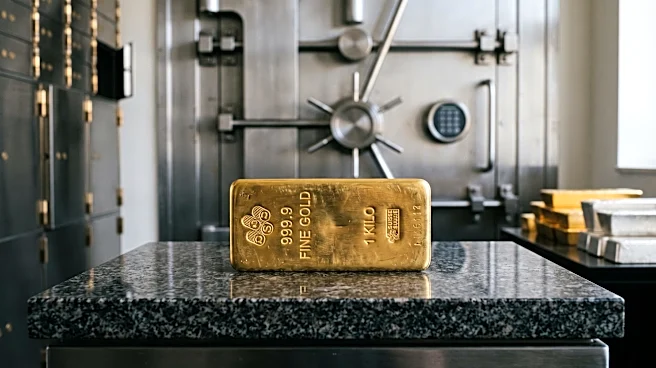
Investor and author Grant Williams recently discussed the critical role of gold in the global monetary system, referring to it as the 'apex predator,' during the 2026 New Orleans Investment Conference. Williams argues that while politicians may not voluntarily
adopt a gold standard, the inevitable breakdown of the current financial system—characterized by excessive debt, instability, and currency debasement—will compel a return to gold. He posits that a future revaluation of gold could be instrumental in restoring confidence in the monetary system. Williams's perspective suggests a reversal of investment conditions seen over the past four decades, indicating a significant shift in economic paradigms. The discussion was part of a series of conversations recorded at the conference, highlighting expert opinions on the future of finance.
Why It's Important?
Williams's analysis is significant for U.S. economic stakeholders, investors, and policymakers as it challenges the prevailing fiat currency system and suggests a potential return to a gold-backed standard. Such a shift would have profound implications for the U.S. dollar's global reserve status, inflation rates, and the overall stability of financial markets. A revaluation of gold could lead to a significant redistribution of wealth, impacting those holding substantial gold assets positively, while potentially devaluing other forms of currency and investments. Businesses and individuals would need to re-evaluate their financial strategies, potentially increasing demand for physical gold and gold-related investments. The argument underscores growing concerns about financial instability and the long-term sustainability of current economic policies, prompting a re-examination of fundamental monetary principles.
What's Next?
If Williams's predictions hold true, the global financial landscape could see increasing volatility as the existing system faces mounting pressures from debt and currency debasement. Investors might increasingly turn to gold and silver as safe-haven assets, driving up their value. Policymakers, particularly in the U.S., could face growing calls to address financial instability and consider alternative monetary frameworks, including discussions around a gold standard or gold-backed currencies. The ongoing debate among economists and financial experts about the future of money will likely intensify, with more attention given to historical precedents and the inherent value of precious metals. The insights from the New Orleans Investment Conference will contribute to this broader discourse, influencing investment decisions and policy considerations in the coming years.
Beyond the Headlines
The concept of gold as an 'apex predator' in the financial system touches upon deeper philosophical and historical aspects of money. Throughout history, gold has served as a reliable store of value and a medium of exchange, often re-emerging as a trusted asset during times of economic crisis. Williams's argument suggests that the current era of unbacked fiat currencies may be reaching its limits, leading to a cyclical return to more tangible forms of wealth. This perspective raises ethical questions about the responsibility of governments and central banks in managing national currencies and the potential for financial systems to become detached from real economic value. Culturally, a return to gold could signify a shift in public trust from abstract financial instruments back to concrete, universally recognized assets, reflecting a fundamental re-evaluation of economic security and stability.