








What's Happening?
Composting at home provides an effective method for converting food scraps and yard waste into nutrient-rich soil, beneficial for gardening. The process requires a designated space, a suitable container, and a balanced mixture of 'greens' (nitrogen-rich
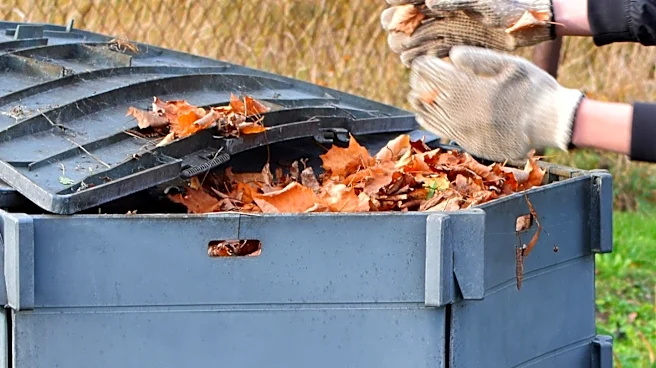
materials like food scraps) and 'browns' (carbon-rich materials such as dried leaves). A general guideline suggests a ratio of two to three parts browns to one part greens by volume. Certain materials, including meat, dairy, and oily foods, should be avoided in compost piles. Maintaining appropriate moisture levels and aeration is crucial for successful composting. For individuals without a yard, alternative methods like worm bins or community drop-off sites are viable options. Leaves, in particular, are a significant component of compost, offering a free and abundant source of carbon-rich plant matter. They can be combined with other garden waste and kitchen scraps to produce a versatile soil amendment, as highlighted by Michael Jesiolowski, manager of the Plant Clinic at The Morton Arboretum.
Why It's Important?
Home composting plays a vital role in environmental sustainability and resource management within the U.S. By diverting organic waste from landfills, it reduces methane emissions, a potent greenhouse gas, thereby contributing to climate change mitigation efforts. The resulting compost enriches soil structure, making clay soil less dense and improving water retention in sandy soil, which is crucial for agricultural productivity and urban gardening. This practice also lessens the reliance on synthetic fertilizers, which can have adverse environmental impacts through runoff into waterways. Economically, composting offers a cost-effective way for households to produce their own soil amendments, reducing expenses on gardening supplies. Furthermore, it promotes a circular economy by transforming waste into a valuable resource, fostering a more sustainable approach to consumption and land use across communities.
What's Next?
The continued promotion and adoption of home composting are expected to expand, driven by increasing environmental awareness and local initiatives. Educational programs, such as those offered by institutions like The Morton Arboretum, will likely continue to provide guidance on effective composting techniques, including the optimal use of fallen leaves. Communities may see an increase in accessible composting resources, such as public drop-off points or subsidized composting bins, to encourage broader participation. As more households embrace composting, there could be a noticeable reduction in municipal waste volumes, potentially leading to lower waste management costs for local governments. Additionally, ongoing research into composting methods and their benefits will likely refine best practices, making home composting even more efficient and impactful for both individual gardeners and the wider environment.
Beyond the Headlines
Beyond its immediate environmental and economic benefits, home composting fosters a deeper connection between individuals and their natural environment. It encourages a mindful approach to waste, transforming what might be considered refuse into a valuable resource. This practice can cultivate a sense of self-sufficiency and responsibility for one's ecological footprint. On a broader scale, widespread adoption of composting could shift societal perceptions of waste, moving towards a more regenerative model where organic materials are seen as inputs for new growth rather than disposable items. This cultural shift could influence policy decisions regarding waste management, urban planning, and sustainable agriculture, promoting a more holistic and integrated approach to environmental stewardship across the nation.