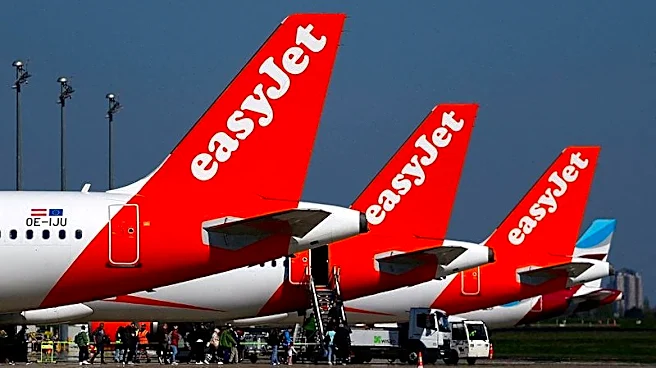




What's Happening?
EasyJet has agreed to a £5.7 billion takeover by U.S. private equity firm Apollo Global Management. The airline accepted the offer after rival bidder Castlelake withdrew from the acquisition process. The deal, valued at £7.15 per share, allows EasyJet's
founder, Stelios Haji-Ioannou, and his family to retain their shareholding. The agreement includes a structure to comply with EU foreign ownership rules, with Apollo limited to a 49.9% stake. The takeover is expected to be completed by March 2027. Apollo has committed to supporting EasyJet's current strategy and maintaining its UK and EU head offices. The acquisition aims to enhance EasyJet's connectivity and support long-term growth.
Why It's Important?
The acquisition of EasyJet by Apollo Global Management represents a significant development in the airline industry, highlighting the growing influence of private equity in the sector. The deal provides EasyJet with the financial backing needed to navigate the challenges facing the aviation industry, including rising fuel costs and geopolitical tensions. Apollo's commitment to supporting EasyJet's strategy and maintaining its operational bases in the UK and EU is crucial for ensuring continuity and stability. The acquisition also underscores the importance of compliance with EU foreign ownership rules, which are designed to protect the interests of European airlines. The deal's completion will be closely watched by industry stakeholders, as it could set a precedent for future private equity investments in the aviation sector.
What's Next?
As the takeover process moves forward, EasyJet and Apollo will focus on finalizing the details of the acquisition and ensuring a smooth transition. The airline's management will work closely with Apollo to align their strategic goals and explore opportunities for growth and expansion. The completion of the deal by March 2027 will mark a new chapter for EasyJet, as it seeks to strengthen its market position and enhance its service offerings. Industry observers will be monitoring the impact of the acquisition on EasyJet's operations and its ability to compete in the highly competitive European aviation market. The deal may also prompt other airlines to consider similar partnerships with private equity firms to secure financial stability and support future growth.
Beyond the Headlines
The EasyJet acquisition highlights broader trends in the aviation industry, including the increasing role of private equity in shaping the sector's future. As airlines face ongoing challenges such as fluctuating fuel prices and regulatory changes, private equity firms offer a source of capital and strategic support. The deal also raises questions about the long-term implications of private equity ownership for airline operations and customer service. As the industry evolves, stakeholders will need to consider the balance between financial interests and the need to maintain high standards of safety, reliability, and customer satisfaction. The outcome of the EasyJet acquisition could influence future investment decisions and shape the competitive landscape of the aviation industry.