





What's Happening?
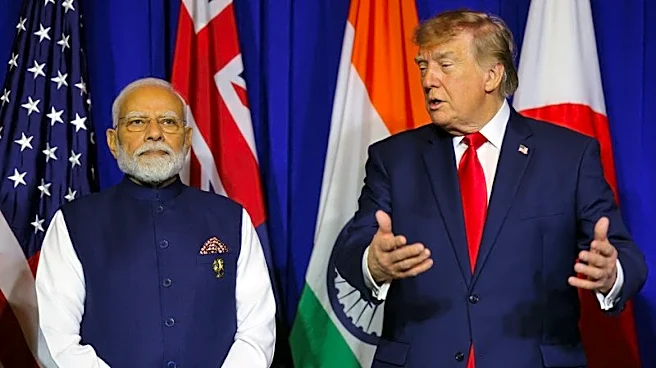
The trade deal between the United States and India is reportedly close to finalization, with signals from various officials including President Trump, Marco Rubio, and India's Nirmala Sitharaman, S. Jaishankar, and Piyush Goyal. However, a significant
caveat has emerged: India is awaiting clarity on U.S. tariff policy and the status of pending Section 301 investigations. According to Commerce Secretary Rajesh Agrawal, this clarity is crucial as it will determine whether Indian exporters gain a competitive advantage or fall behind. The concern stems from the fact that the U.S. can initiate new Section 301 investigations even after a deal is signed, and could also threaten tariffs under the Graham Act related to India's purchases of Russian oil. This situation has left India as the sole nation still negotiating along pre-ruling lines, with its concessions on the table while Washington's replacement tariff offer remains undefined.
Why It's Important?
This situation is critical because it highlights a fundamental imbalance in the ongoing trade negotiations. India has made significant concessions, but the U.S. position on future tariffs and investigations remains ambiguous, creating uncertainty for Indian exporters. The lack of a clear and stable U.S. tariff policy undermines the predictability that a trade deal is supposed to provide, potentially negating the benefits for Indian businesses seeking to price contracts with confidence. For the U.S., the ability to impose tariffs or initiate investigations post-agreement could be seen as a powerful leverage tool, but it also risks eroding trust and the long-term viability of the trade relationship. The outcome will significantly impact trade flows, investment decisions, and the overall economic partnership between the two nations, affecting industries from agriculture to defense technology.
What's Next?
The immediate next step involves India seeking definitive clarity from the U.S. regarding its tariff policy and the future of Section 301 investigations. Without this, India may consider postponing or withdrawing from the negotiations until Washington is prepared to offer a more balanced and predictable deal. The U.S. administration will need to decide whether to provide the requested assurances to secure the deal or maintain its flexibility on tariff actions. The resolution of these uncertainties will dictate the timeline for the agreement's signing, if it proceeds. Stakeholders in both countries, particularly exporters and importers, will be closely monitoring these developments, as the final terms will directly influence their market access and operational costs. The ongoing discussions will also test the diplomatic resolve and strategic alignment between the two nations.
Beyond the Headlines
The current impasse reveals deeper implications regarding the nature of U.S. trade policy and its impact on international agreements. The U.S. Supreme Court's decision to strike down reciprocal tariffs under IEEPA has seemingly weakened Washington's bargaining position, as it now has less to offer in terms of tariff concessions. This has led to a situation where India is negotiating with significant concessions on its part, while the U.S. offer remains vague. This dynamic raises questions about the fairness and sustainability of such trade negotiations, potentially setting a precedent where one party holds disproportionate leverage through the threat of future punitive actions. It also underscores the need for robust legal frameworks within trade agreements that provide long-term stability and protection against unilateral actions, fostering a more equitable and predictable global trading environment.